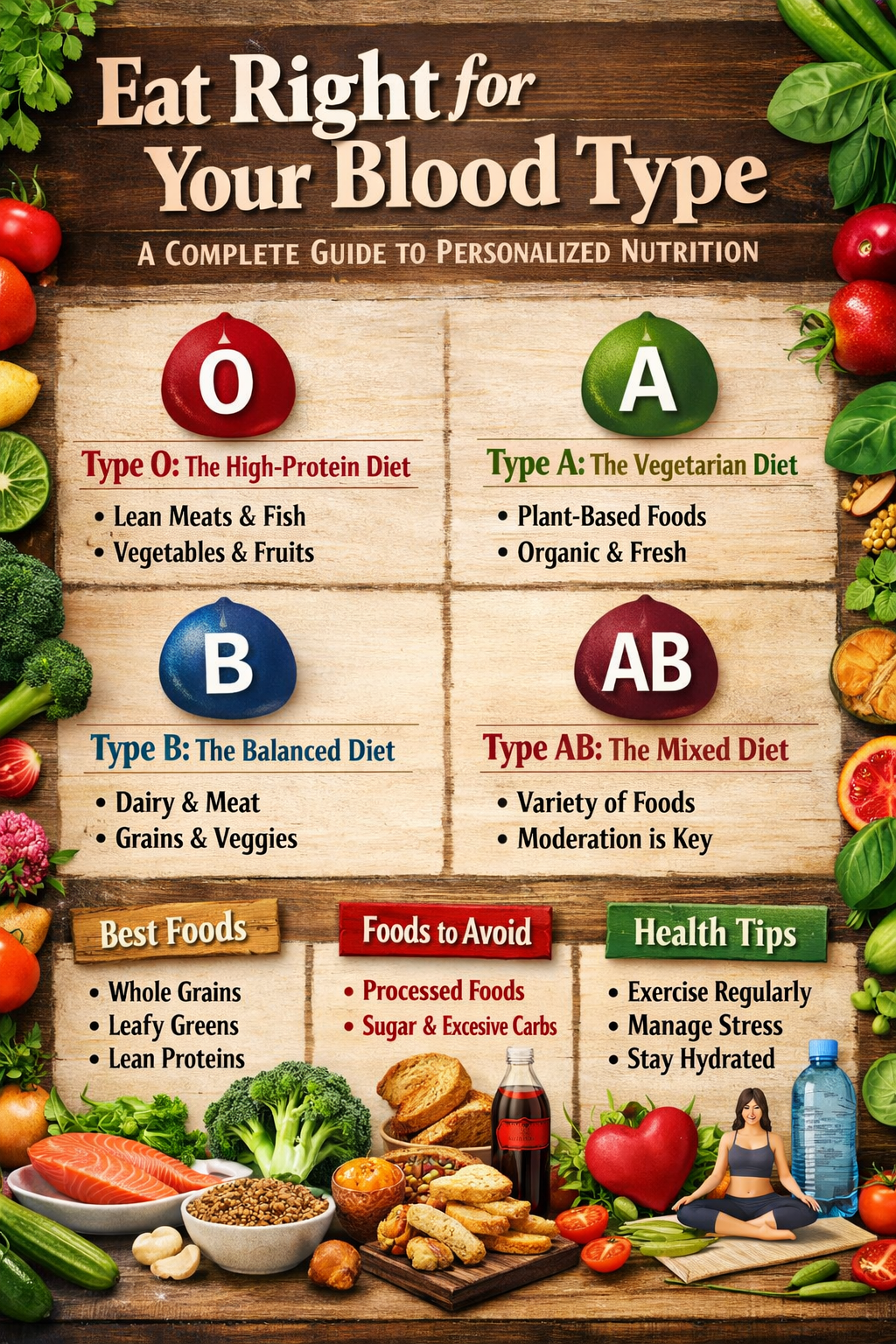
Eating according to your blood type is more than a trendy diet; it is a personalized nutrition approach that takes into account how your body digests and metabolizes different foods based on your blood group. The concept, popularized by Dr. Peter D’Adamo in his book Eat Right 4 Your Type, suggests that each blood type—A, B, AB, and O—responds differently to proteins, fats, and carbohydrates. This means that what works for one person might not be optimal for another.
The blood type diet emphasizes eating foods that support your blood chemistry, boost metabolism, and enhance digestion, while avoiding foods that could trigger inflammation, weight gain, or other health issues. For example, people with type O blood may benefit from a high-protein diet with lean meats and vegetables, while type A individuals often thrive on plant-based diets with minimal animal products.
Following this approach can help with:
- Weight management by aligning food choices with natural digestive efficiency
- Energy optimization, reducing fatigue and boosting mental clarity
- Improved digestion by avoiding foods that may cause bloating, gas, or intolerance
- Reduced risk of chronic illnesses, such as heart disease or diabetes, by emphasizing foods suited to your physiology
What Is the Blood Type Diet?
The blood type diet is a nutritional approach that tailors your food choices based on your ABO blood group. Developed by Dr. Peter D’Adamo, the diet is built on the idea that each blood type has unique digestive capabilities and immune system traits, which influence how efficiently the body processes different foods. By eating foods that are compatible with your blood type, proponents believe you can optimize metabolism, support overall health, and prevent certain diseases.
The diet classifies foods into three categories for each blood type:
- Beneficial foods – these are highly recommended and believed to enhance digestion, energy, and immune function.
- Neutral foods – generally safe to eat but do not provide significant benefits.
- Avoid foods – may cause digestive issues, inflammation, or weight gain over time.
For example, studies and anecdotal evidence suggest that type O individuals thrive on high-protein diets with lean meats and fish, while type A individuals do better with plant-based diets rich in vegetables, fruits, and legumes. Type B and AB diets fall somewhere in between, combining both animal and plant-based foods depending on the individual’s traits.
While some critics argue that there is limited scientific evidence supporting the blood type diet, many people report improved digestion, weight management, and energy levels when following it. Nutritionists also emphasize that focusing on whole, minimally processed foods—regardless of blood type—tends to improve overall health.
Key takeaway: The blood type diet is not a one-size-fits-all plan. Instead, it offers a framework to customize your nutrition, helping you identify which foods support your body’s natural physiology and which ones may hinder your health goals.
How Your Blood Type A Affects Your Nutrition
Key Traits of Blood Type A
People with blood type A are often described as having a sensitive digestive system and a tendency toward lower stomach acid production. This means they may struggle with heavy, fatty, or highly processed foods. Type A individuals often thrive on a calm, plant-based diet, and their bodies may respond well to stress-reducing practices like meditation or yoga, which complement nutritional choices.
Some common traits of type A include:
- Slower metabolism compared to type O
- Higher sensitivity to processed foods and red meats
- Greater risk of heart disease or diabetes if diet is high in unhealthy fats and sugars
- Strong immune response to plant-based nutrients
Foods Recommended for Blood Type A
Type A nutrition emphasizes fresh, organic, and plant-based foods. Key recommended foods include:
Vegetables and Fruits:
- Leafy greens: spinach, kale, broccoli
- Root vegetables: carrots, beets, sweet potatoes
- Fruits: berries, plums, apples, pears
Proteins:
- Tofu, tempeh, and legumes
- Fish (like salmon, mackerel, sardines)
- Limited eggs
Grains and Nuts:
- Whole grains: brown rice, quinoa, oats
- Seeds and nuts in moderation: pumpkin seeds, almonds
Beverages:
- Green tea, herbal teas
- Fresh vegetable juices
Tip: Type A individuals often do better eating smaller, frequent meals rather than heavy, protein-rich dinners.
Foods to Avoid for Blood Type A
Type A should limit foods that can stress their sensitive digestive system or trigger inflammation:
- Red meat (beef, pork, lamb)
- Dairy products, especially whole milk and cheese
- Processed foods, fried foods, and refined sugars
- Certain legumes: kidney beans, lima beans
Avoiding these foods may help reduce bloating, improve energy, and support heart and metabolic health.
Summary for Blood Type A
- Focus on plant-based, organic foods
- Eat lean proteins like fish and tofu
- Avoid red meat, dairy, and processed foods
- Incorporate stress-reducing lifestyle habits alongside nutrition
How Your Blood Type B Affects Your Nutrition
Key Traits of Blood Type B
Individuals with blood type B are often described as having a robust and adaptable digestive system. They can typically tolerate a wider variety of foods compared to type A, including dairy and some meats. Type B people are often energetic, resilient, and may have a strong immune system, but they are also prone to certain health issues like autoimmune disorders, inflammation, or stress-related conditions if their diet isn’t balanced.
Common characteristics include:
- Balanced metabolism, but sensitive to certain lectins found in grains and legumes
- Generally tolerant to dairy
- May gain weight if diet is high in processed foods or wheat
- Immune system benefits from a variety of nutrient-rich foods
Foods Recommended for Blood Type B
Type B individuals thrive on a mixed diet that includes both animal and plant-based foods. Recommended foods include:
Proteins:
- Lean meats: lamb, mutton, venison
- Fish: salmon, cod, halibut
- Dairy: yogurt, kefir, low-fat milk
Vegetables and Fruits:
- Leafy greens: kale, broccoli, cabbage
- Root vegetables: carrots, sweet potatoes
- Fruits: bananas, grapes, pineapples, plums
Grains and Legumes:
- Moderate consumption of grains: oatmeal, rice, spelt
- Avoid overconsumption of wheat products
Beverages:
- Green tea, herbal teas
- Water and fresh fruit juices
Tip: Blood Type B individuals benefit from balanced meals with protein, healthy fats, and complex carbohydrates, avoiding excess processed foods.
Foods to Avoid for Blood Type B
Some foods may trigger inflammation, weight gain, or digestive issues:
- Chicken (may interfere with metabolism)
- Corn, wheat, rye
- Lentils, peanuts, sesame seeds
- Processed or fried foods
By limiting these foods, type B individuals may experience better digestion, stable energy, and improved overall health.
Summary for Blood Type B
- Eat a balanced diet with lean meats, dairy, vegetables, and moderate grains
- Avoid chicken, corn, wheat, and processed foods
- Focus on nutrient diversity to support energy and immunity
How Your Blood Type AB Affects Your Nutrition
Key Traits of Blood Type AB
Blood type AB is the rarest, and individuals with this type often have combined traits of types A and B. Their digestive system can handle a mix of plant-based and moderate animal proteins, but they may have sensitive stomachs and fluctuating energy levels. Type AB individuals may also be prone to cardiovascular issues and low stomach acid, so careful food choices are important for maintaining balance.
Common characteristics include:
- Digestive system is sensitive like type A but more flexible like type B
- Susceptible to stress and heart-related conditions
- Benefit from nutrient-rich, balanced meals
- Respond well to moderate exercise and mindful eating
Foods Recommended for Blood Type AB
Type AB diets combine the best of type A and B foods, focusing on lean proteins, seafood, vegetables, and moderate dairy:
Proteins:
- Seafood: salmon, sardines, tuna, cod
- Tofu, tempeh, and eggs
- Limited lean meats: turkey, lamb
Vegetables and Fruits:
- Leafy greens: spinach, kale, broccoli
- Cruciferous vegetables: cauliflower, cabbage
- Fruits: cherries, grapes, berries
Grains and Legumes:
- Rice, oats, quinoa
- Limited legumes like lentils and black beans
Beverages:
- Green tea, herbal teas, water
- Avoid excessive caffeine and alcohol
Tip: Type AB individuals benefit from smaller, frequent meals and should combine plant and animal proteins in moderation to maintain energy and digestive health.
Foods to Avoid for Blood Type AB
Certain foods may trigger digestive discomfort, inflammation, or fatigue:
- Red meat, especially beef and pork
- Kidney beans, lima beans, and corn
- Excess caffeine and alcohol
- Processed or fried foods
Avoiding these foods helps support heart health, prevent digestive issues, and maintain stable energy throughout the day.
Summary for Blood Type AB
- Combine lean proteins, seafood, vegetables, and moderate grains
- Avoid red meat, certain beans, caffeine, and processed foods
- Eat smaller, frequent meals to support digestion and energy
How Your Blood Type O Affects Your Nutrition
Key Traits of Blood Type O
People with blood type O are often referred to as the “hunter” type, with a digestive system that produces high levels of stomach acid. This makes them well-suited for a high-protein diet that includes lean meats and fish. However, type O individuals may struggle with digesting grains and dairy, and are more prone to thyroid imbalances, inflammation, and joint issues if their diet includes too many processed foods or carbohydrates.
Common characteristics include:
- Efficient protein metabolism, but lower tolerance for grains and dairy
- Active metabolism, often requiring more calories from protein and vegetables
- Higher tendency toward stress-related weight gain if diet and exercise aren’t balanced
- Benefit from regular high-intensity exercise
Foods Recommended for Blood Type O
Type O nutrition emphasizes lean proteins, vegetables, and certain fruits, with limited carbohydrates:
Proteins:
- Lean meats: beef, lamb, venison, poultry in moderation
- Fish: cod, mackerel, salmon, herring
- Eggs in moderation
Vegetables and Fruits:
- Leafy greens: kale, spinach, broccoli
- Root vegetables: carrots, sweet potatoes
- Fruits: plums, figs, prunes, berries
Grains and Legumes:
- Minimal grains; focus on gluten-free options like rice or buckwheat
- Legumes are limited; avoid lentils and kidney beans
Beverages:
- Green tea, herbal teas, water
- Avoid sugary drinks and excessive caffeine
Tip: Type O individuals benefit from high-protein breakfasts and early dinners, and should incorporate strength training or cardio to complement their diet.
Foods to Avoid for Blood Type O
Certain foods may interfere with digestion or contribute to weight gain:
- Dairy products, especially cheese and whole milk
- Wheat, corn, and most grains
- Legumes like lentils, kidney beans, and peanuts
- Processed or fried foods
Avoiding these foods can reduce inflammation, improve metabolism, and support healthy weight management.
Summary for Blood Type O
- Eat high-protein meals with lean meats, fish, and vegetables
- Limit grains, legumes, and dairy
- Combine diet with regular exercise for optimal health
Health Benefits of Eating Right for Your Blood Type
Eating right for your blood type isn’t just about following a strict list of foods—it’s about personalizing nutrition to fit your body’s unique chemistry. When done correctly, this approach can lead to a range of physical and mental health benefits.
1. Improved Digestion
Each blood type has different digestive strengths and sensitivities, so eating compatible foods can reduce bloating, gas, and other gastrointestinal discomforts. For example:
- Type A benefits from plant-based diets rich in fiber
- Type O thrives on high-protein foods that support strong stomach acid
By avoiding foods that are incompatible with your blood type, your body can absorb nutrients more efficiently.
2. Weight Management and Metabolism Optimization
Following a diet tailored to your blood type can help:
- Boost metabolism
- Reduce fat accumulation
- Encourage natural weight loss
Case studies show that individuals who follow a blood type-specific diet often report easier weight management without the need for extreme calorie restriction. For instance, type O individuals often lose weight more effectively on high-protein diets, while type A individuals maintain a healthier weight on plant-based plans.
3. Increased Energy and Mental Clarity
Eating foods compatible with your blood type may help stabilize blood sugar levels and prevent energy crashes. Many people report:
- Reduced afternoon fatigue
- Better focus and concentration
- Higher overall vitality
4. Potential Reduction in Chronic Disease Risk
Some proponents argue that blood type diets may reduce the risk of chronic diseases by:
- Lowering inflammation
- Supporting cardiovascular health
- Enhancing immune function
For example, type A diets rich in vegetables and low in red meat may lower heart disease risk, while type O high-protein diets can support lean muscle mass and overall metabolic health.
Data Insight: Research is still ongoing, but anecdotal evidence from thousands of diet followers suggests improved well-being, better digestion, and more consistent energy levels.
Summary
By eating right for your blood type, you can improve digestion, manage weight more effectively, increase energy, and potentially reduce the risk of chronic health conditions. It’s a personalized approach that aligns your diet with your unique physiology, rather than following one-size-fits-all guidelines.
Common Myths and Misconceptions About the Blood Type Diet
While the blood type diet has gained popularity, it’s also faced skepticism and criticism. Understanding the myths helps readers approach the diet realistically and safely.
Myth 1: One Diet Fits Everyone
A common misconception is that the blood type diet is a universal solution. In reality, different blood types require different foods. What benefits a type O individual may cause digestive issues for a type A person. This highlights the importance of personalization in nutrition.
Myth 2: Scientific Evidence Is Conclusive
Some critics argue that there’s limited scientific research proving the effectiveness of the blood type diet. While studies are ongoing, anecdotal evidence and individual experiences often show improved digestion, energy, and weight management when foods are chosen according to blood type. Nutritionists suggest combining blood type guidance with general healthy eating principles like whole foods and balanced meals.
Myth 3: Blood Type Diet Prevents All Diseases
No diet can guarantee disease prevention. The blood type diet may reduce risk factors for certain conditions, such as cardiovascular issues or digestive problems, but it should not replace medical advice or treatments. It’s best viewed as a supportive lifestyle approach, not a cure-all.
Myth 4: You Must Follow the Diet Strictly
Some believe strict adherence is required. In practice, flexibility is key. Gradually introducing recommended foods and reducing incompatible items often yields better long-term results. Listening to your body’s response is more important than following rigid rules.
Myth 5: Blood Type Determines Your Entire Health
While blood type influences how your body reacts to certain foods, other factors like genetics, lifestyle, stress, and physical activity also play a major role in overall health. Eating right for your blood type is one component of a holistic approach to wellness.
Summary
The blood type diet offers guidance and structure, but it’s important to separate fact from fiction. Personalization, flexibility, and combining this diet with healthy lifestyle habits will maximize benefits without falling for myths or unrealistic claims.
How to Start Eating Right for Your Blood Type
Starting the blood type diet doesn’t have to be complicated. With a few clear steps, you can personalize your nutrition and make it a sustainable lifestyle.
1. Identify Your Blood Type
Before you can follow a blood type diet, you need to know your ABO blood group. You can find this out by:
- Checking your medical records or blood donation card
- Asking your doctor for a blood type test
- Using at-home blood typing kits
Knowing your exact blood type ensures you select foods that support digestion, metabolism, and overall health.
2. Learn Recommended Foods for Your Type
Once you know your blood type, focus on foods that are beneficial for your group and limit foods that are not recommended. For example:
- Type A: Plant-based, minimal animal protein
- Type B: Balanced mix of protein, dairy, and vegetables
- Type AB: Combination of A and B dietary traits
- Type O: High-protein, low-grain diet
3. Create a Weekly Meal Plan
Planning ahead makes it easier to stick to the diet. Include:
- Breakfast, lunch, and dinner options
- Healthy snacks
- Variety to ensure nutrient balance
Tip: Use color-coded charts or apps to track which foods are beneficial, neutral, or to avoid.
4. Shop Smart
When grocery shopping:
- Stick to whole, unprocessed foods
- Choose fresh fruits and vegetables
- Avoid pre-packaged meals high in sugar or refined grains
Shopping with a blood type diet in mind helps prevent temptations and unhealthy choices.
5. Monitor Your Body’s Response
Pay attention to how your body reacts:
- Digestive comfort
- Energy levels
- Weight changes
- Mood and focus
This allows you to adjust the diet to your individual needs, since every body responds differently—even within the same blood type.
6. Incorporate Lifestyle Habits
Nutrition works best when combined with:
- Regular exercise suited to your blood type (e.g., cardio for type O, yoga for type A)
- Stress management techniques
- Adequate sleep and hydration
Key Takeaway: Eating right for your blood type is a holistic approach—it’s not just about food, but overall lifestyle alignment.
Sample Meal Plans for Each Blood Type
Creating a meal plan tailored to your blood type makes it easier to eat right for your blood type and stay consistent. Below are examples of daily meal plans for each blood type.
Blood Type A Meal Plan Example
Breakfast:
- Oatmeal topped with berries and pumpkin seeds
- Green tea
Lunch:
- Quinoa salad with kale, cherry tomatoes, cucumbers, and olive oil dressing
- Grilled tofu or tempeh
Snack:
- Fresh fruit or a handful of almonds
Dinner:
- Steamed vegetables with brown rice
- Baked salmon or small portion of fish
Blood Type B Meal Plan Example
Breakfast:
- Scrambled eggs with spinach and mushrooms
- Herbal tea
Lunch:
- Grilled lamb or chicken (moderate)
- Mixed green salad with olive oil and lemon
Snack:
- Low-fat yogurt with berries
Dinner:
- Baked cod with roasted carrots and broccoli
- Steamed brown rice
Blood Type AB Meal Plan Example
Breakfast:
- Smoothie with spinach, berries, and almond milk
- Herbal tea
Lunch:
- Mixed vegetable stir-fry with tofu and shrimp
- Quinoa or rice
Snack:
- Fresh fruit or walnuts
Dinner:
- Baked turkey or fish
- Steamed greens and roasted root vegetables
Blood Type O Meal Plan Example
Breakfast:
- Scrambled eggs with spinach and mushrooms
- Herbal tea or water
Lunch:
- Grilled lean beef or lamb
- Steamed broccoli and carrots
Snack:
- Fresh fruit (like berries or plums)
- Handful of nuts
Dinner:
- Baked salmon with a side of leafy greens
- Sweet potatoes or minimal rice
Tips for All Blood Types:
- Stay hydrated: Drink water and herbal teas throughout the day
- Balance meals: Include proteins, healthy fats, and complex carbohydrates as suited to your blood type
- Listen to your body: Adjust portions and food choices based on energy levels and digestion
Frequently Asked Questions (FAQs) About Eating Right for Your Blood Type
Here are some of the most common questions people have about the blood type diet, answered in a simple and practical way.
1. Can the blood type diet help with weight loss?
Yes, many people report weight loss and easier weight management when following a diet tailored to their blood type. By eating foods that support your metabolism and avoiding foods that trigger inflammation or slow digestion, your body can naturally maintain a healthier weight.
2. Is the blood type diet safe for everyone?
Generally, the diet is safe for most healthy adults. However, it’s important to consult a healthcare professional if you have medical conditions, nutritional deficiencies, or are pregnant. The diet emphasizes whole foods, but individual adjustments may be needed.
3. How strictly should I follow the blood type diet?
Flexibility is key. While sticking to recommended foods is ideal, you don’t need to be rigid. Gradually introducing recommended foods and reducing incompatible ones often results in better long-term adherence and overall health benefits.
4. Can the blood type diet prevent diseases?
The diet may reduce risk factors for certain conditions, like heart disease or digestive issues, but it is not a cure or guarantee. Combining this diet with a healthy lifestyle, exercise, and regular medical check-ups is essential.
5. Are there any scientific studies supporting the blood type diet?
Currently, research is limited and results are mixed. Some studies show no significant correlation between blood type and diet response, while many anecdotal reports suggest improved digestion, energy, and weight control. Experts recommend using the diet as a guideline rather than a strict rule.
6. Can I combine the blood type diet with other diets?
Yes! The blood type diet can be combined with other healthy eating patterns, such as Mediterranean, plant-based.
Tips for Success on the Blood Type Diet
Following the blood type diet can be simple and effective if you apply a few practical strategies. These tips help you maximize health benefits, improve digestion, and maintain energy levels.
1. Track Your Meals and Monitor Your Body
Keep a food journal to record:
- What you eat each day
- How your body responds (energy, digestion, mood)
- Any changes in weight or overall health
Monitoring your body helps identify which foods truly benefit you, even within the same blood type.
2. Gradually Introduce Recommended Foods
Switching diets overnight can be overwhelming. Instead:
- Start by replacing a few meals per week with blood type-friendly options
- Gradually reduce foods that are not recommended
- Adjust based on how your body feels
This method ensures a smoother transition and sustainable results.
3. Combine Diet with Exercise
Physical activity enhances the benefits of the blood type diet:
- Type O: high-intensity workouts or strength training
- Type A: yoga, Pilates, or moderate cardio
- Type B: moderate exercise with a mix of cardio and strength
- Type AB: combination of low-impact and moderate-intensity workouts
Exercise not only boosts metabolism but also supports digestion and mental health.
4. Focus on Whole, Fresh Foods
Prioritize:
- Fresh fruits and vegetables
- Lean proteins and plant-based foods
- Minimally processed grains and dairy (if compatible)
Whole foods enhance nutrient absorption and reduce inflammation.
5. Listen to Your Body
Even within the same blood type, individual responses vary. Pay attention to:
- Energy levels
- Digestive comfort
- Mood and mental clarity
Adjust your diet based on how your body reacts, rather than following rules blindly.
6. Plan Ahead
- Meal prep and grocery shopping help avoid impulsive choices
- Keep healthy snacks on hand for convenience
- Prepare simple, balanced meals that follow blood type guidelines
Key Takeaway
Success on the blood type diet is not about perfection—it’s about consistency, personalization, and mindful eating. Combining proper nutrition with lifestyle habits ensures long-term health benefits and improved overall well-being.
Conclusion: Personalized Nutrition for Better Health
Eating right for your blood type is a practical and personalized approach to nutrition that considers how your body digests and metabolizes different foods. By understanding your blood type and following compatible dietary guidelines, you can optimize digestion, boost energy, manage weight, and support long-term health.
Each blood type—A, B, AB, and O—has unique nutritional needs:
- Type A: thrives on plant-based diets and lean proteins like fish and tofu
- Type B: benefits from a balanced mix of meat, dairy, and vegetables
- Type AB: combines A and B traits, favoring seafood, tofu, and moderate lean meats
- Type O: excels on high-protein diets with lean meats and vegetables
The blood type diet is not a rigid prescription, but a flexible framework to guide healthier choices. By gradually introducing recommended foods, monitoring your body’s responses, and combining nutrition with exercise, stress management, and mindful eating, you can create a sustainable lifestyle that supports both physical and mental well-being.
Actionable Tip: Start by identifying your blood type, learn the foods that benefit your type, and design a simple weekly meal plan. Small, consistent steps will help you eat right for your blood type and feel your best every day.