
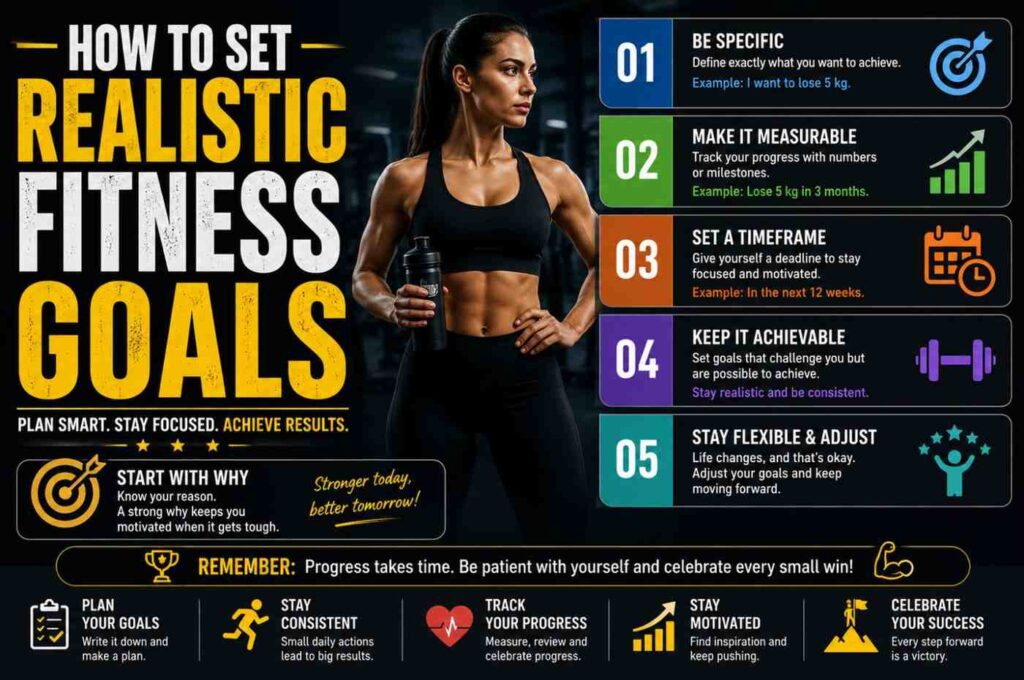
How to Set Realistic Fitness Goals (Step-by-Step Guide)
Starting a fitness journey often feels exciting at first, but many people struggle to maintain consistency because their goals are not clearly defined or realistic. This is why understanding how to set realistic fitness goals is the foundation of long-term success in health and fitness. A well-structured goal acts as a roadmap, helping you stay focused, motivated, and disciplined even when progress feels slow.
Realistic fitness goals are not about achieving extreme transformations in a short time. Instead, they focus on steady improvement that matches your current lifestyle, fitness level, and personal commitments. For example, instead of aiming to lose a large amount of weight in a few weeks, a more realistic approach would be to target gradual fat loss combined with improved strength and stamina over several months.
When you set realistic goals, you reduce the risk of burnout, injury, and frustration. You also create a sustainable system where fitness becomes a part of your daily life rather than a temporary challenge. This mindset shift is extremely important for beginners as well as advanced individuals who want long-term results.
In this guide, I will explain step-by-step methods, practical strategies, and proven frameworks like SMART goals to help you build a fitness plan that actually works in real life. You will also learn how to track progress, stay motivated, and adjust your goals over time so your fitness journey remains consistent and effective.
Ultimately, learning how to set realistic fitness goals is not just about planning workouts—it is about creating a balanced lifestyle that supports both your physical and mental well-being.
Understanding What Realistic Fitness Goals Mean
Setting realistic fitness goals is the foundation of any successful health and fitness journey. Many people begin with strong motivation but struggle to continue because their expectations are not aligned with their actual lifestyle or physical capacity. A realistic fitness goal is not about achieving perfection quickly; instead, it focuses on gradual, measurable progress that can be sustained over time. This approach helps reduce frustration and increases long-term consistency.
A realistic goal takes into account your current fitness level, daily routine, work schedule, and even mental readiness. For example, someone who has never exercised regularly should not immediately aim for intense gym workouts every day. Instead, starting with light activities such as walking or basic home exercises is more practical and sustainable. Over time, these small steps build confidence and endurance.
Another important aspect is adaptability. Real-life situations change—work pressure, family commitments, or health issues can all affect your routine. A realistic fitness plan allows flexibility so that setbacks do not completely break your progress. Ultimately, understanding what is achievable for you personally is the first and most important step in learning how to set realistic fitness goals effectively.
Why unrealistic fitness goals fail
Unrealistic fitness goals often fail because they ignore human limitations and lifestyle realities. Many individuals expect rapid transformations, such as losing a large amount of weight in a short time or achieving advanced fitness levels within weeks. These expectations are not only physically difficult but also mentally exhausting.
When the body is pushed too hard too quickly, it increases the risk of fatigue, injury, and burnout. For example, someone who suddenly starts exercising daily without rest may experience muscle strain or loss of motivation within a few days. This leads to quitting altogether, which creates a cycle of frustration.
Psychologically, unrealistic expectations create disappointment. When results do not match expectations, motivation drops significantly. This is why many fitness journeys fail within the first month. A sustainable approach focuses on steady progress rather than instant results, making it far more effective in the long run.
Characteristics of realistic fitness goals
Realistic fitness goals share several important characteristics that make them achievable and sustainable. First, they are specific and clearly defined. Instead of saying “I want to get fit,” a realistic goal would be “I will walk 30 minutes five days a week.”
Second, they are measurable. You can track progress using time, repetitions, weight, or frequency. This helps you stay aware of improvements and stay motivated.
Third, realistic goals are flexible. Life circumstances change, so your fitness plan should adapt without causing stress or guilt. Finally, they are aligned with your long-term health, not just short-term appearance changes.
Difference between short-term and long-term goals
Short-term and long-term fitness goals serve different purposes but work best when combined. Short-term goals focus on immediate actions such as completing workouts, increasing step count, or drinking more water daily. These goals help build habits and provide quick motivation.
Long-term goals, on the other hand, focus on broader outcomes like weight management, muscle gain, or improved endurance over several months. When both are balanced, short-term goals act as stepping stones toward long-term success, ensuring steady progress without overwhelm.
Why Setting Fitness Goals Is Important for Success
Setting fitness goals provides structure, direction, and motivation throughout your fitness journey. Without clear goals, exercise routines often become inconsistent and lack purpose. Goals act as a roadmap that guides your daily actions and helps you stay focused even when motivation fluctuates.
A major benefit of goal setting is accountability. When you define what you want to achieve, you are more likely to stay committed. For example, if your goal is to exercise three times per week, you are more likely to plan your schedule around it. This creates discipline and consistency over time.
Another important benefit is progress tracking. Fitness is not always visually obvious day-to-day, but structured goals allow you to measure improvements over weeks and months. This makes progress more satisfying and encourages continued effort.
Provides structure and direction
Structure is essential in any fitness journey. Without it, workouts become random and inconsistent, which reduces effectiveness. Having a structured plan means you know exactly what exercises to do, how often to do them, and what outcomes to expect.
For example, a structured plan might include cardio on Mondays, strength training on Wednesdays, and flexibility exercises on Fridays. This removes confusion and helps you stay organized. Over time, this structure becomes a habit, making fitness part of your daily life rather than a temporary effort.
Improves motivation and consistency
Motivation naturally fluctuates, but having clear fitness goals helps maintain consistency even during low-motivation periods. When you know what you are working toward, it becomes easier to stay committed.
For instance, seeing small improvements such as increased stamina or better sleep reinforces positive behavior. This creates a psychological reward system that keeps you engaged. Consistency is more powerful than intensity, and goal setting ensures you keep showing up regularly.
Helps track measurable progress
Tracking progress is one of the most important elements of fitness success. Without tracking, improvements can go unnoticed, leading to frustration. By measuring progress—whether through weight, strength, or endurance—you gain clear insight into your development.
Tools like fitness apps or journals can help monitor changes over time. This not only improves motivation but also helps you adjust your plan when needed for better results.
Step-by-Step Guide on How to Set Realistic Fitness Goals
Creating realistic fitness goals requires a structured and thoughtful approach. The first step is understanding your current situation. Many people skip this step and set goals based on inspiration rather than reality, which often leads to failure. Assessing your fitness level helps you create a foundation that is both safe and achievable.
Once you understand your baseline, the next step is defining clear and specific outcomes. Vague goals like “get in shape” do not provide direction. Instead, you should focus on measurable actions such as walking daily or completing a set number of workouts per week.
Finally, breaking larger goals into smaller milestones ensures steady progress. Small wins keep motivation high and make the journey less overwhelming.
Step 1 – Assess your current fitness level
Understanding your starting point is essential. This includes evaluating your stamina, strength, flexibility, and daily activity level. For example, someone who spends most of their day sitting will need a different starting plan compared to someone already moderately active.
This assessment helps prevent injury and ensures your goals are realistic. It also allows you to track progress more effectively, as improvements become more noticeable when you know your baseline.
Step 2 – Define clear and specific outcomes
Specificity is key in fitness planning. Instead of saying “I want to lose weight,” define exactly what you want to achieve and how you will measure it. For example, “I will lose 2 kg in one month through regular exercise and improved diet.”
Clear goals reduce confusion and provide direction. They also make it easier to stay committed because you know exactly what success looks like.
Step 3 – Break big goals into small steps
Large fitness goals can feel overwhelming if not broken down. Dividing them into smaller weekly or daily actions makes them more manageable. For example, instead of focusing on losing 10 kg, focus on walking daily, improving diet, and completing weekly workouts.
These small steps build momentum and create lasting habits, making long-term success much more achievable.
Using SMART Goals Framework for Fitness Success
The SMART goals framework is one of the most effective tools for setting structured fitness goals. It helps ensure that your goals are realistic, measurable, and achievable within a specific timeframe. Without structure, many people struggle with consistency and clarity.
SMART stands for Specific, Measurable, Achievable, Relevant, and Time-bound. Each element plays an important role in turning vague intentions into actionable plans.
What is SMART goals framework?
The SMART framework provides a structured way to design goals that are practical and trackable. Instead of setting general intentions, it forces you to define exactly what you want to achieve and how you will measure success.
For example, instead of saying “I want to get fit,” a SMART goal would be: “I will complete 30 minutes of exercise five days a week for the next four weeks.” This clarity makes execution easier and reduces uncertainty.
Example of SMART fitness goals
A good example of a SMART fitness goal is: “I will walk 8,000 steps daily for 30 days to improve cardiovascular health.” This goal is specific, measurable, and time-bound, making it easier to follow.
Another example is strength-focused: “I will complete three strength training sessions per week for six weeks to improve muscle endurance.” These structured goals provide direction and motivation.
Benefits of using SMART goals
Using SMART goals improves clarity, reduces confusion, and increases accountability. It allows you to track progress easily and make adjustments when necessary. Most importantly, it increases the likelihood of long-term success because the goals are realistic and structured.
Common Mistakes People Make in Fitness Goal Setting
Many people struggle with fitness not because they lack effort, but because they make avoidable mistakes during goal setting. One of the most common issues is setting unrealistic expectations without considering lifestyle constraints. This often leads to disappointment and loss of motivation.
Another major mistake is ignoring recovery. Rest is a critical part of fitness, and skipping it can slow progress or cause injury. Additionally, many people fail to track their progress, which makes it difficult to stay motivated.
Understanding these mistakes helps you avoid them and build a more sustainable fitness journey.
Setting overly aggressive targets
Aggressive targets often lead to burnout. For example, trying to exercise every day without rest or expecting rapid weight loss can overwhelm both the body and mind. While enthusiasm is good, unrealistic pressure can be counterproductive.
A better approach is gradual improvement. Small, consistent progress is more sustainable and leads to long-term success without unnecessary stress.
Ignoring rest and recovery
Rest is essential for muscle repair and overall performance. Without proper recovery, the body becomes fatigued, increasing the risk of injury. Many beginners underestimate this aspect and overtrain, which slows down progress.
Incorporating rest days improves strength, endurance, and mental focus, making workouts more effective.
Not tracking progress regularly
Without tracking, it is difficult to see improvements, which can reduce motivation. Keeping a simple record of workouts, weight changes, or step counts helps maintain awareness and encourages consistency.
Tracking also allows you to adjust your plan based on real results.
Tracking Progress and Using Tools Effectively
Tracking progress is one of the most powerful ways to stay consistent in fitness. It helps you understand what is working and what needs improvement. Without tracking, even small achievements may go unnoticed, leading to frustration.
Modern fitness tools such as apps, smartwatches, and journals make tracking easier than ever. These tools provide real-time feedback, helping you stay engaged and motivated throughout your journey.
Using fitness apps and journals
Fitness apps can track steps, workouts, calories, and even sleep patterns. Alternatively, a simple notebook can be used to record daily progress. Both methods are effective if used consistently.
The key is regular tracking. When you document your progress, you gain a clearer understanding of your habits and improvements over time.
Monitoring physical and mental changes
Progress is not only physical. Improvements in energy levels, sleep quality, and mood are also important indicators of success. These changes often appear before visible physical transformation.
Recognizing these benefits helps maintain motivation even when physical changes are slow.
Adjusting goals based on progress
Fitness goals should evolve over time. If a goal becomes too easy or too difficult, it should be adjusted accordingly. This ensures continuous improvement without burnout or stagnation.
Flexibility is essential for long-term success.
Staying Motivated Throughout Your Fitness Journey
Motivation plays a crucial role in maintaining consistency. However, motivation alone is not enough; it must be supported by habits and structure. Many people start strong but lose momentum after a few weeks.
Building a sustainable system helps you stay on track even when motivation decreases.
Building a consistent routine
A fixed routine removes decision fatigue. When workouts are scheduled at the same time each day or week, they become part of your lifestyle.
This consistency helps turn fitness into a habit rather than a temporary activity.
Rewarding small achievements
Celebrating small milestones helps maintain motivation. Rewards can be simple, such as taking a rest day, enjoying a healthy treat, or tracking progress visually.
These small rewards reinforce positive behavior.
Surrounding yourself with support
Having supportive friends or joining fitness communities increases accountability. When others share similar goals, it becomes easier to stay committed.
Adjusting Fitness Goals Over Time for Better Results
Fitness is a dynamic process, and goals must evolve as your body and lifestyle change. What works today may not be effective in a few months. Regular adjustments ensure continued progress.
When to modify your fitness goals
If you experience fatigue, lack of progress, or loss of motivation, it may be time to reassess your goals. Adjusting does not mean failure; it means adapting intelligently.
How to scale up or down safely
Scaling goals should always be gradual. Increasing intensity too quickly can lead to injury. Similarly, reducing intensity during busy periods helps maintain consistency without pressure.
Importance of flexibility in fitness planning
Flexibility ensures sustainability. A rigid plan often breaks under pressure, while a flexible one adapts to real-life conditions, making long-term success more achievable.
Frequently Asked Questions
Setting realistic fitness goals means defining clear, achievable targets based on your current fitness level, lifestyle, and available time. Instead of focusing on extreme transformations, you should aim for gradual improvements such as exercising three times a week or increasing daily steps. A widely used method is the SMART framework, which ensures goals are Specific, Measurable, Achievable, Relevant, and Time-bound. By tracking progress, adjusting expectations, and staying consistent, you build long-term habits that lead to sustainable fitness results rather than short-term burnout.
How do I set realistic fitness goals step by step?
Start by honestly evaluating your current fitness level, including strength, stamina, and daily activity.
Then identify what is realistically possible based on your lifestyle and available time.
Use the SMART framework to turn vague ideas into clear, measurable goals.
Break big goals into smaller weekly or daily tasks to make them easier to follow.
Finally, track your progress regularly and adjust your plan when needed.
What are SMART fitness goals examples?
A SMART fitness goal is specific, measurable, and time-based, such as “I will jog for 20 minutes three times a week for one month.”
Another example is “I will walk 10,000 steps daily for 30 days to improve health.”
These goals clearly define what you will do and how often.
They also make it easier to track progress and stay consistent.
Because they are structured, they reduce confusion and increase success rate.
Why do fitness goals fail so often?
Fitness goals often fail because people set unrealistic expectations without proper planning.
Many try to achieve fast results, which leads to burnout and frustration.
Lack of consistency is another major reason people stop midway.
Ignoring rest and recovery can also cause injury and loss of motivation.
Without tracking progress, people fail to see improvements and give up early.
How long should fitness goals take?
The time frame depends on the type of fitness goal you set and your starting point.
Small goals like improving daily activity can show results in a few weeks.
Larger goals like weight loss or muscle gain usually take several months.
Fitness is a gradual process that requires patience and consistency.
Focusing on steady progress is more important than achieving quick results.
How can I stay motivated to work out?
You can stay motivated by setting small and achievable milestones that keep you engaged.
Tracking your progress helps you see improvements, which boosts motivation.
Creating a fixed workout routine makes exercise a habit rather than a choice.
A support system like friends or fitness groups also increases accountability.
Celebrating small wins helps you stay consistent over the long term.
Conclusion
Learning how to set realistic fitness goals is essential for building a sustainable and successful fitness journey. When your goals are clearly defined, structured, and truly achievable based on your current lifestyle and fitness level, it becomes much easier to stay consistent over time. Instead of feeling overwhelmed or discouraged by unrealistic expectations, you create a balanced approach that supports steady progress and long-term success.
A major reason many fitness journeys fail is because people focus on rapid results rather than sustainable habits. By shifting your mindset toward gradual improvement, you allow your body and mind to adapt naturally to new routines. This not only reduces the risk of burnout and injury but also helps you develop discipline that lasts beyond short-term motivation.
Using strategies like SMART goal planning ensures that your fitness objectives remain specific, measurable, and time-bound, making them easier to track and achieve. At the same time, progress tracking helps you stay aware of even small improvements, which builds confidence and reinforces positive habits. Flexible adjustments are equally important because life circumstances can change, and your fitness plan should be able to adapt without causing frustration or guilt.