Understanding Weight Loss and Nutrition
Losing weight can often feel confusing with all the diets, apps, and conflicting advice out there. However, at its core, weight loss is about creating a balance between the calories you consume and the calories your body burns. This is why a structured meal plan for weight loss is one of the most effective strategies for achieving long-term results. By carefully choosing what and when you eat, you can boost your metabolism, manage hunger, and maintain muscle mass, all while losing fat.
How Weight Loss Works
Weight loss occurs when your body burns more calories than you consume, creating a calorie deficit. However, it’s not just about eating less—the quality of the food you eat matters as much as the quantity. Foods rich in protein, fiber, and healthy fats help you feel full longer, reduce cravings, and prevent overeating. For example, studies show that high-protein diets can increase metabolism and reduce appetite, making weight loss easier over time.
Importance of a Balanced Diet
A successful weight loss meal plan should include all essential nutrients. This means:
- Protein: Supports muscle retention and keeps you full. Sources include chicken, fish, tofu, legumes, and eggs.
- Carbohydrates: Your body’s main energy source. Focus on complex carbs like oats, quinoa, and whole grains.
- Fats: Essential for hormone balance and brain health. Choose healthy fats such as olive oil, avocado, nuts, and seeds.
- Micronutrients: Vitamins and minerals from fruits, vegetables, and fortified foods ensure your body functions optimally.
A balanced approach prevents nutrient deficiencies and helps maintain energy levels throughout your weight loss journey.
Common Mistakes in Weight Loss Diets
Even well-intentioned diets can fail if certain pitfalls are ignored:
- Skipping meals – This can slow metabolism and trigger overeating later.
- Over-restricting calories – Extremely low-calorie diets can lead to nutrient deficiencies, fatigue, and muscle loss.
- Ignoring nutrient balance – Focusing only on calories, without considering macronutrients, can lead to poor satiety and loss of muscle mass.
By understanding these fundamentals, you set the foundation for a meal plan for weight loss that is both effective and sustainable.
Benefits of Following a Structured Meal Plan for Weight Loss
Creating and sticking to a structured meal plan for weight loss offers far more than just calorie control. It provides a roadmap to healthier eating habits, reduces decision fatigue, and ensures you get the right nutrients every day. Here are the key benefits of following a structured meal plan:
1. Supports Consistent Weight Loss
One of the biggest challenges in losing weight is inconsistency. Random eating, skipping meals, or impulsive snacking can derail your progress. A structured meal plan ensures that you consume the right calories and macronutrients each day, making weight loss gradual, steady, and sustainable. Research shows that people who follow planned meals are more likely to maintain long-term weight loss compared to those who rely on ad-hoc dieting.
2. Prevents Overeating and Cravings
When your meals are planned, there is less temptation to grab unhealthy snacks or fast food. Including protein, fiber, and healthy fats in each meal keeps you fuller for longer, reducing cravings. For instance, having a balanced breakfast with eggs, oats, and berries can prevent mid-morning sugar cravings, which are common triggers for overeating.
3. Saves Time and Reduces Stress
Deciding what to eat daily can be stressful, especially when trying to lose weight. Meal planning eliminates this daily decision-making, making healthy eating effortless. Preparing meals in advance (meal prep) can save hours during the week and ensures you always have nutritious options available, reducing the temptation to eat processed foods.
4. Helps Build Healthy Eating Habits
Following a structured meal plan helps you learn portion control, balance, and timing of meals, all essential skills for lifelong healthy eating. Over time, these habits become natural, making it easier to maintain weight loss even after the plan ends. For example, planning dinner around vegetables, lean protein, and whole grains teaches your body to prioritize nutrient-dense foods over empty calories.
5. Enhances Nutrient Intake
A thoughtfully designed weight loss meal plan ensures that you meet your body’s nutritional needs. By planning meals with a variety of proteins, complex carbs, healthy fats, and vegetables, you avoid deficiencies that can cause fatigue, irritability, or poor recovery from exercise.
Quick Tip:
For maximum results, combine a structured meal plan with regular physical activity. Even light exercise, such as walking 30 minutes daily, can boost weight loss while improving overall health.
How to Create a Meal Plan for Weight Loss
Designing a meal plan for weight loss isn’t about strict deprivation—it’s about smart choices, balanced nutrition, and sustainable habits. By understanding your body’s needs and planning meals carefully, you can achieve weight loss without feeling hungry or deprived.
1. Calculating Your Calorie Needs
The first step in creating a meal plan is determining how many calories your body needs to maintain its current weight. From there, you can create a calorie deficit to promote weight loss.
Steps to Calculate:
- Determine your Basal Metabolic Rate (BMR): This is the number of calories your body burns at rest.
- Factor in your activity level: Multiply your BMR by an activity factor (sedentary, lightly active, moderately active, very active).
- Set a calorie deficit: A deficit of 500–750 calories per day typically leads to safe weight loss of about 1–1.5 pounds per week.
Example: A moderately active person with a daily calorie need of 2,000 calories could aim for 1,500–1,600 calories daily for weight loss.
2. Choosing the Right Macronutrient Balance
A balanced weight loss meal plan should include all three macronutrients—protein, carbohydrates, and fats—in the right proportions:
- Protein (25–30% of daily calories): Essential for muscle retention and satiety. Include lean meats, eggs, fish, tofu, and legumes.
- Carbohydrates (40–50% of daily calories): Focus on complex carbs like whole grains, vegetables, fruits, and legumes for sustained energy.
- Fats (20–30% of daily calories): Healthy fats support hormone function and brain health. Sources include nuts, seeds, olive oil, and avocado.
Tip: A higher-protein diet has been shown to increase metabolism and reduce appetite, which helps with weight loss.
3. Meal Timing and Frequency
When you eat can impact hunger, energy, and metabolism. While there’s no one-size-fits-all rule, these strategies can help:
- Breakfast: Kickstart metabolism and reduce morning cravings.
- Lunch & Dinner: Include a balance of protein, carbs, and vegetables.
- Snacks: Choose nutrient-dense options like fruit, yogurt, or nuts to prevent overeating.
- Intermittent Fasting (optional): Some people benefit from restricted eating windows, but it’s not necessary for everyone.
4. Portion Control Tips
Even healthy foods can contribute to weight gain if portions are too large. Here are practical tips:
- Use smaller plates to naturally reduce portions.
- Fill half your plate with vegetables, one-quarter with lean protein, and one-quarter with whole grains.
- Measure portions with cups or a food scale until you can estimate visually.
- Listen to your body—stop eating when you feel comfortably full, not stuffed.
5. Planning for Flexibility
A successful weight loss meal plan allows for flexibility. Include occasional treats to avoid feeling restricted and make the plan sustainable long-term. For instance, one dessert a week is fine as long as the overall calorie balance is maintained.
Quick Tip:
Creating a weekly meal prep plan helps you stay consistent and reduces the temptation to order unhealthy food. Batch cooking proteins, grains, and vegetables can save time and ensure you always have a healthy meal ready.
This section gives a complete guide for creating a personalized meal plan for weight loss, covering calories, macronutrients, meal timing, and portion control.
Sample Meal Plans for Weight Loss
Creating a meal plan for weight loss is easier when you have concrete examples to follow. Here, we provide a variety of sample meal plans designed for different goals and dietary preferences. All plans are balanced, nutrient-rich, and structured to support fat loss while keeping you full and energized.
1. 7-Day Meal Plan for Beginners
This plan is ideal for people just starting their weight loss journey. It includes simple, quick-to-prepare meals that cover all essential nutrients.
Day 1 Example:
| Meal | Food Choices |
|---|---|
| Breakfast | Oatmeal with berries and a boiled egg |
| Snack | Greek yogurt with a handful of almonds |
| Lunch | Grilled chicken salad with mixed greens & quinoa |
| Snack | Apple slices with peanut butter |
| Dinner | Baked salmon, steamed broccoli, and brown rice |
Day 2 Example:
| Meal | Food Choices |
|---|---|
| Breakfast | Smoothie with spinach, banana, protein powder |
| Snack | Carrot sticks with hummus |
| Lunch | Turkey wrap with whole grain tortilla & veggies |
| Snack | Handful of walnuts |
| Dinner | Stir-fried tofu with mixed vegetables & quinoa |
Repeat similar meals for the rest of the week, mixing proteins, grains, and vegetables for variety.
2. High-Protein Meal Plan
High-protein meal plans are excellent for muscle retention, satiety, and metabolism. Aim for protein at every meal.
- Breakfast: Scrambled eggs with spinach and smoked salmon
- Snack: Cottage cheese with sliced cucumber
- Lunch: Grilled chicken breast, roasted sweet potato, and green beans
- Snack: Protein shake or boiled eggs
- Dinner: Baked cod with quinoa and asparagus
Studies show that increasing protein intake can reduce appetite and help preserve lean muscle during weight loss.
3. Vegetarian/Vegan Meal Plan
Plant-based weight loss meal plans focus on fiber-rich foods and plant proteins.
- Breakfast: Chia pudding with almond milk and berries
- Snack: Edamame or roasted chickpeas
- Lunch: Lentil salad with quinoa, spinach, and avocado
- Snack: Apple with almond butter
- Dinner: Tofu stir-fry with broccoli, bell peppers, and brown rice
Tip: Include a variety of protein sources like beans, lentils, tofu, tempeh, and nuts to meet daily protein needs.
4. Low-Carb or Keto Meal Plan
Low-carb or ketogenic plans are ideal for those looking to reduce carbs and increase fat for satiety.
- Breakfast: Omelet with cheese, mushrooms, and spinach
- Snack: Handful of macadamia nuts
- Lunch: Grilled salmon with zucchini noodles and olive oil
- Snack: Celery sticks with cream cheese
- Dinner: Roasted chicken thighs with cauliflower mash
Caution: Low-carb plans may not be suitable for everyone; consult a professional if you have medical conditions.
5. Meal Prep Strategies
Meal prep is key to sticking to your weight loss meal plan:
- Batch cook proteins: Chicken, tofu, beans, or fish for several meals.
- Prepare grains in advance: Cook brown rice, quinoa, or oats in bulk.
- Chop vegetables ahead: Store in airtight containers for quick meals.
- Portion meals: Use containers to divide meals by calories/macros.
Effective meal prep can save hours per week and ensures healthy eating even on busy days.
This section gives readers ready-to-use meal plans, demonstrating practical application of the weight loss meal plan concept for beginners, high-protein, vegetarian, and low-carb diets.
If you’re ready, I can move on to the next section: Foods to Include in a Weight Loss Meal Plan, where I’ll go into detail about the best foods to eat for fat loss, including lists, examples, and nutritional tips.
Do you want me to continue?
You said:
continue
ChatGPT said:
Great! Let’s move on to the next section: Foods to Include in a Weight Loss Meal Plan. I’ll make it detailed, with examples, lists, and practical tips.
Foods to Include in a Weight Loss Meal Plan
The key to an effective meal plan for weight loss is choosing foods that nourish your body, keep you full, and support fat loss. Here’s a detailed breakdown of the best options:
1. Lean Proteins
Protein is essential for muscle maintenance, satiety, and boosting metabolism. Aim for lean sources at every meal:
- Chicken breast, turkey, lean beef
- Fish like salmon, cod, or tuna
- Eggs and egg whites
- Plant-based proteins: tofu, tempeh, lentils, chickpeas, beans
- Low-fat dairy: Greek yogurt, cottage cheese
Tip: Include protein in breakfast to reduce mid-morning cravings.
2. Whole Grains
Whole grains provide long-lasting energy and fiber, which helps you feel full:
- Brown rice, quinoa, bulgur, farro
- Oats and oatmeal
- Whole-grain bread, tortillas, and pasta
- Barley and millet
Avoid refined grains like white bread, white rice, and pastries, as they can spike blood sugar and increase hunger.
3. Fruits and Vegetables
Fruits and vegetables are low in calories but high in fiber, vitamins, and antioxidants, making them essential for any weight loss plan:
- Leafy greens: spinach, kale, arugula
- Cruciferous vegetables: broccoli, cauliflower, Brussels sprouts
- Berries: blueberries, strawberries, raspberries
- Citrus fruits: oranges, grapefruits, lemons
- Others: carrots, zucchini, bell peppers, tomatoes
Tip: Fill half your plate with vegetables at lunch and dinner to reduce calorie intake naturally.
4. Healthy Fats
Healthy fats support hormonal health, brain function, and satiety:
- Avocado
- Nuts: almonds, walnuts, cashews
- Seeds: chia, flax, pumpkin, sunflower
- Olive oil, coconut oil (in moderation)
- Fatty fish: salmon, mackerel, sardines
Tip: Use fats strategically—small amounts can make meals more satisfying and help control cravings.
5. Hydration and Low-Calorie Drinks
Drinking enough fluids supports metabolism, digestion, and appetite control:
- Water: aim for 8–10 glasses per day
- Herbal teas: green tea, chamomile, peppermint
- Sparkling water (unsweetened)
- Black coffee in moderation
Tip: Sometimes thirst is mistaken for hunger. Drink water before snacking to prevent overeating.
6. Fiber-Rich Foods
Fiber slows digestion, keeps you full, and supports digestive health:
- Whole grains and oats
- Beans and lentils
- Fruits and vegetables
- Nuts and seeds
Research shows that higher fiber intake is linked to lower calorie consumption and improved weight management.
This section ensures readers know exactly what foods to prioritize in their weight loss meal plan, giving them practical, science-backed guidance to support fat loss while staying healthy and satisfied.
Foods to Avoid or Limit in a Weight Loss Meal Plan
While including the right foods is essential, avoiding or limiting certain foods can accelerate weight loss and prevent setbacks. Here’s what to watch out for:
1. Sugary Drinks and Snacks
Sugary beverages and snacks provide empty calories without satiety:
- Soda, sweetened juices, energy drinks
- Candy, chocolate bars, cookies, pastries
- Flavored coffee drinks with added sugar
Alternative: Replace sugary drinks with water, herbal tea, or black coffee. Opt for fruit or yogurt when craving something sweet.
2. Processed Foods and Refined Carbs
Highly processed foods are often high in calories, low in nutrients, and can trigger overeating:
- White bread, white rice, pastries
- Packaged snacks like chips or instant noodles
- Fast food meals high in refined carbs and unhealthy fats
Alternative: Choose whole grains, homemade snacks, and minimally processed foods to stay full longer and reduce calorie intake.
3. Excessive Alcohol
Alcohol can add significant calories and reduce inhibition, making overeating more likely:
- Beer, wine, cocktails with sugary mixers
Alternative: Limit alcohol intake, choose dry wine, or replace with sparkling water or herbal tea.
4. High-Sodium Foods
Too much sodium can cause water retention and bloating, giving a false sense of weight gain:
- Packaged soups, canned foods, processed meats (sausage, bacon)
- Fast food or restaurant meals with heavy sauces
Alternative: Use herbs, spices, lemon, and vinegar to flavor foods without adding excess salt.
5. High-Calorie, Low-Nutrition Foods
These foods contribute calories without supporting satiety or nutrient intake:
- Ice cream, pastries, sugary cereals
- Fried foods like French fries or fried chicken
- Cream-based sauces and dressings
Alternative: Enjoy occasional treats in moderation. Use healthier cooking methods such as baking, grilling, or steaming, and choose nutrient-dense alternatives like frozen yogurt, roasted veggies, or homemade dressings.
Quick Tip:
Avoiding these foods doesn’t mean eliminating enjoyment. Focus on moderation and replacement with healthier, filling options to stick to your weight loss meal plan long-term.
Tips for Sticking to Your Meal Plan for Weight Loss
Even the best meal plan for weight loss won’t work if it’s hard to follow consistently. Success comes from habit-building, planning, and mindful strategies. Here are some practical tips to stay on track:
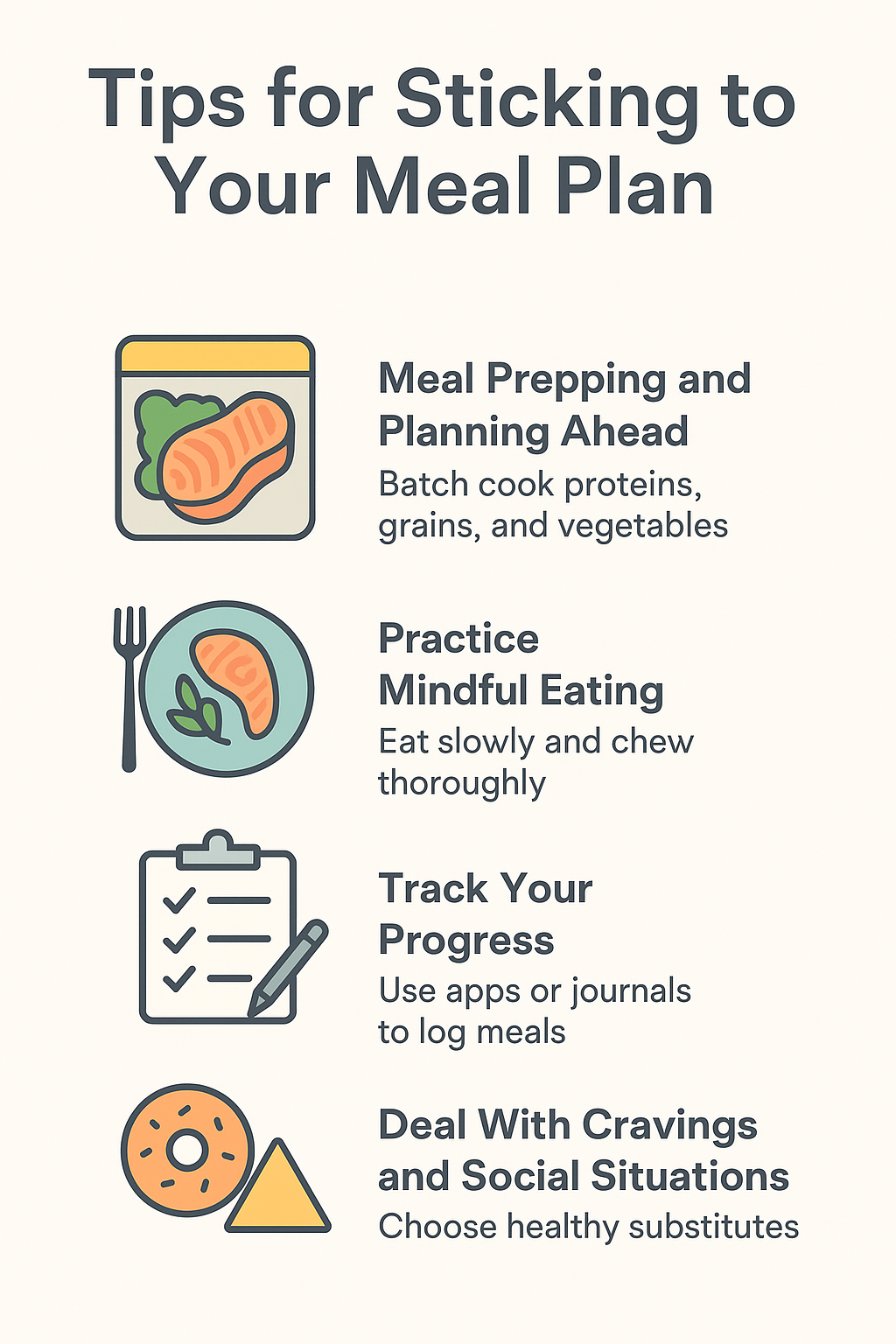
1. Meal Prepping and Planning Ahead
Planning meals in advance reduces decision fatigue and prevents impulsive eating:
- Batch cook proteins, grains, and vegetables for the week
- Portion meals into containers for grab-and-go convenience
- Plan snacks to avoid reaching for unhealthy options
Tip: Dedicate 1–2 hours on the weekend to prepare meals for the week. This saves time and keeps you consistent.
2. Practice Mindful Eating
Being aware of what and how you eat helps reduce overeating:
- Eat slowly and chew thoroughly
- Focus on your meal, avoiding screens or distractions
- Listen to your body’s hunger and fullness cues
Research shows mindful eating can reduce calorie intake and improve long-term adherence to a weight loss plan.
3. Track Your Progress
Keeping a record of meals, calories, or macros can highlight patterns and improve accountability:
- Use apps or journals to log meals
- Track water intake, exercise, and sleep
- Celebrate milestones without guilt
Tip: Focus on progress, not perfection. Missing a meal or indulging occasionally won’t derail results if you return to your plan consistently.
4. Deal With Cravings and Social Situations
Cravings and social events are common challenges when following a meal plan:
- Cravings: Choose healthy substitutes (fruit for sweets, nuts for chips)
- Social situations: Eat a small, balanced snack before events, or plan meals around social eating
- Flexibility: Allow occasional treats to prevent feelings of restriction
Tip: Avoid labeling foods as “bad.” A flexible approach encourages long-term adherence.
5. Make It Enjoyable
Eating healthy doesn’t have to be boring:
- Try new recipes weekly
- Use herbs, spices, and different cooking methods
- Incorporate colorful fruits and vegetables for visual appeal
When meals are enjoyable, you’re more likely to stick with your weight loss meal plan.