
What is Mental Health First Aid Training?
Mental health first aid training is a structured program designed to teach individuals how to identify, understand, and respond to signs of mental health challenges in others. Just like traditional first aid helps people respond to physical injuries, mental health first aid equips people to support someone experiencing a mental health crisis—whether it’s anxiety, depression, psychosis, or substance use issues. The goal is early intervention, providing initial support until professional help can be obtained.
The importance of mental health first aid training cannot be overstated. According to the World Health Organization, one in eight people globally live with a mental health condition, yet many do not receive help due to stigma or lack of awareness. Mental health first aid training addresses this gap by empowering people to act confidently and compassionately.
Key Goals of Mental Health First Aid
Mental health first aid training focuses on several key objectives:
- Recognize early warning signs of mental health conditions in friends, colleagues, and family members.
- Reduce stigma by promoting open, non-judgmental conversations about mental wellbeing.
- Provide initial support through active listening, empathy, and practical guidance.
- Guide individuals toward professional help, including therapists, counselors, or community resources.
Mental Health First Aid vs Regular First Aid
While traditional first aid focuses on physical injuries—like cuts, burns, or heart attacks—mental health first aid deals with emotional and psychological crises. For example:
| Aspect | Physical First Aid | Mental Health First Aid |
|---|---|---|
| Purpose | Treat physical injuries | Support mental wellbeing |
| Examples | CPR, bandages, treating burns | Supporting someone with depression or anxiety |
| Timing | Immediate | Immediate and ongoing support until professional help |
| Skills Required | Physical intervention, medical knowledge | Empathy, communication, crisis management |
Understanding these differences highlights why mental health first aid training is essential in workplaces, schools, and communities—it bridges the gap between crisis onset and professional intervention.
Who Should Take Mental Health First Aid Training?
Mental health first aid training isn’t limited to mental health professionals—it’s designed for anyone who wants to understand mental wellbeing and support those in crisis. In today’s fast-paced world, mental health challenges affect people from all walks of life. Being trained in mental health first aid ensures that you can act with confidence, empathy, and effectiveness when someone around you is struggling.
Professionals Who Benefit Most
Certain professions encounter mental health challenges more frequently, making training especially valuable:
- Teachers and Educators: Often see students exhibiting early signs of anxiety, depression, or behavioral challenges. Early recognition can prevent worsening conditions and improve learning outcomes.
- Healthcare Workers: Nurses, doctors, and allied health professionals regularly interact with patients who may have co-occurring mental health conditions. Mental health first aid provides them with tools to respond sensitively.
- HR Managers and Workplace Leaders: Mental health issues impact productivity and workplace morale. Trained leaders can identify struggles, offer support, and guide employees to resources.
- Community Leaders and Volunteers: People in community support roles—such as social workers, clergy, or nonprofit volunteers—can play a vital role in early intervention.
Why Everyone Can Benefit
Even if your job isn’t directly related to mental health, anyone can benefit from this training. Family members, friends, and neighbors often encounter situations where someone needs emotional support. Knowing how to recognize warning signs, listen actively, and encourage professional help can make a life-saving difference.
Real-Life Examples
Consider these scenarios:
- A high school teacher notices that a student has become withdrawn, missing classes, and showing signs of anxiety. With mental health first aid training, the teacher can approach the student with empathy and connect them with counseling resources.
- In a workplace setting, an employee shows sudden mood swings and decreased productivity. A manager trained in mental health first aid can check in, offer support, and guide the employee to professional help before the situation escalates.
- At home, a family member may observe symptoms of depression or substance misuse in a loved one. Mental health first aid training equips them to provide immediate emotional support and connect the person to appropriate care.
Key Insight: Mental health first aid training doesn’t just help in emergencies; it also improves daily interactions, reduces stigma, and promotes a culture of empathy and understanding.
Benefits of Mental Health First Aid Training
Mental health first aid training provides a wide range of benefits that extend beyond individual knowledge—it positively impacts workplaces, communities, and society as a whole. By learning how to recognize, approach, and support someone experiencing a mental health challenge, participants become more confident, empathetic, and effective in everyday interactions.
Personal Benefits
Taking mental health first aid training equips individuals with skills that improve their own understanding of mental wellbeing:
- Enhanced Awareness: Learn to identify early signs of conditions like depression, anxiety, bipolar disorder, and substance abuse.
- Increased Confidence: Gain the confidence to approach and help someone in distress, reducing feelings of helplessness.
- Emotional Resilience: Understanding mental health improves personal coping skills and emotional intelligence.
- Reduced Stigma: Training encourages a more compassionate perspective toward mental health challenges.
Workplace Benefits
Organizations that implement mental health first aid training see measurable improvements:
- Healthier Work Environment: Employees feel supported and understood, creating a culture of wellbeing.
- Reduced Absenteeism: Early intervention prevents escalation of mental health issues that may lead to time off work.
- Enhanced Productivity: Supported employees are more engaged, focused, and motivated.
- Positive Reputation: Companies demonstrating commitment to employee mental health attract and retain top talent.
Case Study: A study conducted by the Mental Health Foundation (UK) found that workplaces with trained mental health first aiders reported 23% fewer employee absences due to mental health issues and significantly improved workplace satisfaction.
Community Benefits
Mental health first aid training also strengthens community networks:
- Early Intervention: Trained individuals can identify and support those struggling before issues escalate into crises.
- Stronger Support Systems: Families, neighbors, and community groups benefit from improved knowledge and practical skills.
- Crisis Prevention: Rapid, empathetic responses can prevent tragedies such as suicide or severe deterioration in mental health.
Key Insight: The ripple effect of mental health first aid training is profound. By empowering individuals, workplaces, and communities, it fosters a society where mental health challenges are recognized, addressed, and normalized, rather than ignored or stigmatized.
What You Learn in Mental Health First Aid Training
Mental health first aid training equips participants with practical knowledge and actionable skills to help someone experiencing a mental health challenge. The courses combine theoretical understanding with hands-on strategies, ensuring that learners are prepared to respond confidently and compassionately.
Common Topics Covered
A comprehensive mental health first aid course typically covers a variety of mental health issues, including:
- Depression: Recognizing persistent sadness, loss of interest, fatigue, or changes in sleep and appetite.
- Anxiety Disorders: Identifying excessive worry, panic attacks, restlessness, or avoidance behaviors.
- Psychosis: Understanding hallucinations, delusions, and disorganized thinking.
- Substance Use Disorders: Spotting signs of alcohol or drug misuse and its impact on mental health.
- Suicidal Thoughts or Behaviors: Learning to assess risk and respond appropriately.
By addressing a broad spectrum of conditions, participants gain the ability to identify early warning signs and understand the severity of different mental health challenges.
Action Steps Taught in Training
Mental health first aid training follows structured action plans to guide responses in real-life situations:
- Approach the Person Safely: Learn how to start a conversation with empathy and respect.
- Listen Non-Judgmentally: Use active listening to make the person feel heard and validated.
- Give Reassurance and Information: Explain that help is available and that mental health challenges are common.
- Encourage Appropriate Professional Help: Connect the individual with therapists, counselors, or medical professionals.
- Promote Self-Help and Support Strategies: Suggest coping mechanisms, support groups, and wellness activities.
Quote: According to the National Council for Mental Wellbeing, “Mental health first aid training equips everyday people with the skills to step in and offer support during mental health crises—bridging the gap until professional help is available.”
Training Methods
Courses are designed to be interactive and engaging. Common training methods include:
- Workshops and Seminars: In-person sessions with lectures, group discussions, and exercises.
- Role-Playing Scenarios: Practicing conversations and interventions in simulated situations.
- Online Modules: Flexible learning options with videos, quizzes, and downloadable resources.
- Interactive Case Studies: Reviewing real-life situations to understand practical application of skills.
Key Insight: Mental health first aid training doesn’t just teach theory; it empowers participants with practical tools, giving them the confidence to act effectively and compassionately when someone needs help.
Types of Mental Health First Aid Training Courses
Mental health first aid training comes in different formats and specializations to meet the needs of diverse learners. Choosing the right course ensures that participants gain skills most relevant to their environment—whether at work, school, or in the community.
Standard Courses
The standard mental health first aid course is usually 8 hours long and covers a wide range of mental health topics. Key features include:
- Comprehensive Overview: Depression, anxiety, psychosis, substance use, and crisis response.
- Certification: Participants often receive a recognized certificate upon completion.
- Practical Skills: Step-by-step guidance on approaching someone in distress, listening, and connecting them to professional help.
Specialized Courses
Some courses are tailored for specific groups or settings:
- Youth Mental Health First Aid: Focused on supporting adolescents, recognizing school-related stress, bullying, and early signs of mental illness.
- Workplace Mental Health First Aid: Designed for HR professionals, managers, and employees to support colleagues, reduce stigma, and create a mentally healthy work environment.
- Culturally Sensitive or Community-Specific Programs: Courses that address mental health challenges in particular cultural or social contexts, making interventions more effective.
Online vs In-Person Training
Modern training programs often offer flexibility in delivery:
| Format | Pros | Cons |
|---|---|---|
| In-Person | Hands-on practice, role-playing, immediate feedback | Requires travel and scheduling, can be costly |
| Online | Flexible, self-paced, accessible from anywhere | Limited real-time interaction, may feel less engaging |
| Hybrid | Combines online learning with in-person sessions | May require more time and coordination |
Both formats teach the same core concepts, but in-person sessions often provide better practical experience through role-playing and face-to-face discussions.
Key Insight: No matter the format, mental health first aid training is designed to equip participants with actionable skills to support someone in a mental health crisis and promote early intervention. Choosing a course that fits your lifestyle, environment, and goals ensures maximum benefit.
How to Choose the Right Mental Health First Aid Training Program
Choosing the right mental health first aid training program is crucial to ensure you gain practical skills, recognized certification, and the confidence to act in real-life situations. With many providers and course formats available, it’s important to consider several factors before enrolling.
Accreditation and Recognition
Not all mental health first aid courses are officially recognized. Look for programs that are:
- Certified by reputable organizations, such as Mental Health First Aid USA, Mental Health Foundation (UK), or similar accredited bodies in your region.
- Recognized by employers or professional networks, which may enhance career opportunities and credibility.
Course Content and Duration
Different programs may emphasize specific areas, so check that the course:
- Covers a broad range of mental health conditions (depression, anxiety, psychosis, substance use, suicidal behaviors).
- Includes practical skills and role-playing scenarios, not just theory.
- Fits your schedule—courses can range from short workshops (4 hours) to full-day programs (8–12 hours).
Cost and Availability
Pricing varies based on the provider, course length, and delivery method:
- In-person courses tend to be more expensive but provide hands-on learning experiences.
- Online courses are more affordable and flexible but may offer limited real-time interaction.
- Check for funding options or workplace sponsorships, especially if your employer encourages mental health training.
Reviews and Testimonials
Reading feedback from previous participants helps gauge course quality:
- Look for reviews that highlight practical application, instructor knowledge, and participant engagement.
- Testimonials can reveal how confident and prepared participants feel after completing the training.
Pro Tip: Contact the training provider and ask about follow-up support, refresher sessions, and access to resources after certification. A good program provides ongoing learning opportunities to keep skills sharp.
Key Insight: Choosing the right mental health first aid training program is more than just finding a course—it’s about ensuring practical skills, certification, and confidence to support others effectively.
Mental Health First Aid Certification
Completing mental health first aid training often results in certification, which validates your skills and knowledge in supporting someone experiencing a mental health challenge. Certification provides both personal confidence and professional recognition, making it a valuable credential in many settings.
What the Certification Means
- Proof of Competence: Certification demonstrates that you have completed an accredited course and understand how to recognize, approach, and respond to mental health issues.
- Credibility: Employers, colleagues, and community members see that you are trained to provide appropriate support.
- Confidence to Act: Certification ensures you know the correct steps to help someone safely and effectively.
How to Maintain Certification
- Most certifications are valid for 2–3 years, after which refresher courses or continuing education may be required.
- Staying updated ensures that you are aware of new guidelines, tools, and strategies in mental health first aid.
- Some programs offer advanced courses or specialization modules to deepen knowledge in youth mental health, workplace settings, or crisis intervention.
Career Benefits
- Professional Growth: Certification enhances resumes, demonstrating commitment to mental health and wellbeing.
- Workplace Advantage: Organizations increasingly value employees who are trained in mental health first aid to foster a supportive environment.
- Networking Opportunities: Certified individuals often join communities or forums where they can exchange knowledge and best practices.
Statistic: According to Mental Health First Aid USA, organizations that employ certified mental health first aiders see a significant improvement in employee engagement and wellbeing, with 60% of participants reporting increased confidence to support others in crisis.
Key Insight: Mental health first aid certification is more than a certificate—it is a tool to empower you personally, professionally, and within your community to respond effectively to mental health challenges.
Mental Health First Aid Training in the Workplace
Implementing mental health first aid training in the workplace is increasingly recognized as a critical step toward building a healthy, supportive, and productive environment. Mental health challenges can affect anyone, and workplaces that proactively train employees create safer spaces for communication, early intervention, and support.
Why Employers Should Invest
- Improved Employee Wellbeing: Training helps staff identify stress, burnout, or mental health issues early, allowing timely support.
- Enhanced Productivity: Employees who feel supported are more engaged, focused, and motivated.
- Reduced Absenteeism and Turnover: Early intervention prevents long-term mental health issues, reducing sick leave and staff attrition.
- Positive Workplace Culture: Encourages open conversations, reduces stigma, and fosters trust between employees and management.
Case Study: A multinational company in the UK implemented mental health first aid training for 200 employees. After six months, employee surveys reported a 30% increase in confidence to discuss mental health issues and a 25% reduction in stress-related absenteeism.
Implementing a Training Program
Employers can follow several steps to integrate mental health first aid training effectively:
- Assess Needs: Identify departments or roles that would benefit most from training.
- Select Accredited Training Providers: Choose programs recognized by national or international mental health organizations.
- Schedule Flexible Sessions: Consider online, in-person, or hybrid formats to accommodate employees’ schedules.
- Encourage Participation: Offer incentives or embed training into professional development plans.
- Follow Up: Provide refresher courses, resources, and internal support networks to sustain learning.
Additional Workplace Strategies
- Designate Mental Health First Aiders: Employees trained to support colleagues and connect them with professional help.
- Promote Awareness Campaigns: Workshops, seminars, or newsletters to normalize conversations about mental health.
- Integrate Policies: Include mental health first aid in HR policies, ensuring ongoing organizational support.
Key Insight: Workplace mental health first aid training benefits both employees and organizations. It reduces stigma, strengthens support networks, and ensures that employees can access help promptly, creating a culture of wellbeing and productivity.
Mental Health First Aid Training in the Workplace
Implementing mental health first aid training in the workplace is increasingly recognized as a critical step toward building a healthy, supportive, and productive environment. Mental health challenges can affect anyone, and workplaces that proactively train employees create safer spaces for communication, early intervention, and support.
Why Employers Should Invest
- Improved Employee Wellbeing: Training helps staff identify stress, burnout, or mental health issues early, allowing timely support.
- Enhanced Productivity: Employees who feel supported are more engaged, focused, and motivated.
- Reduced Absenteeism and Turnover: Early intervention prevents long-term mental health issues, reducing sick leave and staff attrition.
- Positive Workplace Culture: Encourages open conversations, reduces stigma, and fosters trust between employees and management.
Case Study: A multinational company in the UK implemented mental health first aid training for 200 employees. After six months, employee surveys reported a 30% increase in confidence to discuss mental health issues and a 25% reduction in stress-related absenteeism.
Implementing a Training Program
Employers can follow several steps to integrate mental health first aid training effectively:
- Assess Needs: Identify departments or roles that would benefit most from training.
- Select Accredited Training Providers: Choose programs recognized by national or international mental health organizations.
- Schedule Flexible Sessions: Consider online, in-person, or hybrid formats to accommodate employees’ schedules.
- Encourage Participation: Offer incentives or embed training into professional development plans.
- Follow Up: Provide refresher courses, resources, and internal support networks to sustain learning.
Additional Workplace Strategies
- Designate Mental Health First Aiders: Employees trained to support colleagues and connect them with professional help.
- Promote Awareness Campaigns: Workshops, seminars, or newsletters to normalize conversations about mental health.
- Integrate Policies: Include mental health first aid in HR policies, ensuring ongoing organizational support.
Key Insight: Workplace mental health first aid training benefits both employees and organizations. It reduces stigma, strengthens support networks, and ensures that employees can access help promptly, creating a culture of wellbeing and productivity.
Common Myths and Misconceptions About Mental Health First Aid
Despite growing awareness, many people still have misconceptions about mental health first aid training. Clarifying these myths helps individuals and organizations understand its purpose, benefits, and accessibility.
Myth 1: Only Mental Health Professionals Can Help
Reality: Mental health first aid training is designed for everyone, not just therapists or counselors. The training equips ordinary people with the skills to recognize warning signs, provide initial support, and guide someone to professional help. Early intervention by a trained layperson can make a significant difference in preventing crises.
Myth 2: It’s Only for People in Crisis
Reality: While the training covers crisis situations such as suicidal thoughts or panic attacks, it also focuses on everyday support. Participants learn to recognize subtle signs of stress, anxiety, or depression and provide guidance before issues escalate. Mental health first aid is as much about prevention as it is about intervention.
Myth 3: Mental Health First Aid is Complicated
Reality: Mental health first aid training is simple, structured, and practical. Courses break down approaches into clear, step-by-step action plans. Participants learn communication techniques, active listening, and referral strategies without needing prior mental health expertise.
Myth 4: Certification Doesn’t Matter
Reality: Certification demonstrates that an individual has completed an accredited training program, providing credibility and reassurance to employers, colleagues, and community members. It also ensures that the skills learned are aligned with current best practices in mental health support.
Fact: According to Mental Health First Aid International, individuals trained in mental health first aid are twice as likely to feel confident intervening in a mental health crisis compared to untrained peers.
Key Insight: Understanding and addressing these myths is crucial. Mental health first aid training is accessible, practical, and beneficial for everyone, helping create a more supportive, understanding, and proactive environment both personally and professionally.
FAQs About Mental Health First Aid Training
People often have many questions before enrolling in a mental health first aid training course. Addressing these FAQs helps clarify expectations and encourages more individuals to take the step toward learning these essential skills.
1. How long does mental health first aid training take?
Most standard courses last 8 hours, which can be completed in a single day or split over two sessions. Specialized courses, such as youth or workplace mental health first aid, may vary in length but generally range from 4 to 12 hours depending on the content and format.
2. Is mental health first aid training suitable for all ages?
Yes. While the content is generally targeted at adults, youth-focused programs are available to train educators, parents, and mentors on how to support adolescents. There is also no upper age limit—anyone interested in supporting mental health can benefit.
3. Can online training replace in-person training?
Online courses are convenient and flexible, offering video lessons, quizzes, and downloadable resources. However, in-person training provides more interactive experiences, including role-playing and direct practice, which can improve confidence and practical skills. Many organizations offer hybrid models that combine the benefits of both formats.
4. How much does mental health first aid training cost?
Costs vary depending on provider, course length, and delivery method. On average:
- Online courses: $50–$150 USD
- In-person standard courses: $200–$400 USD
- Some employers or community organizations may cover costs or offer subsidies.
5. Is the certification recognized globally?
Most certifications are recognized by reputable mental health organizations in multiple countries, such as Mental Health First Aid International, Mental Health First Aid USA, and Mental Health Foundation (UK). However, recognition may vary by region, so it’s best to check with local professional bodies if you need it for workplace or official purposes.
Key Insight: Understanding the practical details—duration, format, cost, and recognition—makes mental health first aid training more accessible and helps learners choose the right program for their needs.
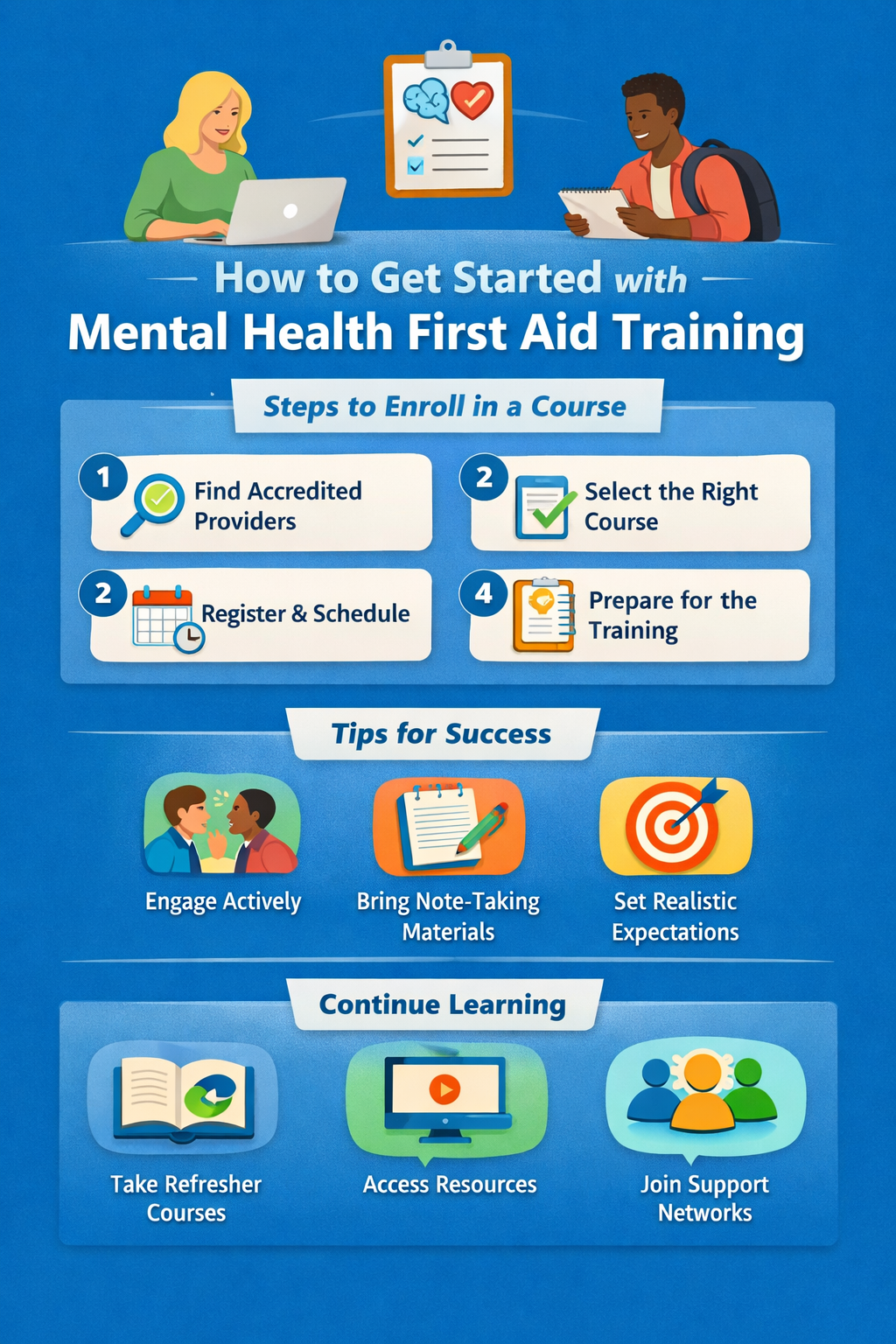
How to Get Started with Mental Health First Aid Training
Taking the first step toward mental health first aid training is easier than many people think. With accredited programs widely available, you can start building the knowledge and skills needed to support others in mental health crises.
Steps to Enroll in a Course
- Find Accredited Providers: Search for recognized organizations such as Mental Health First Aid International, local health foundations, or government-endorsed programs.
- Select the Right Course: Consider your goals—whether you want general training, workplace-focused, or youth-specific programs.
- Register and Schedule: Most programs allow online registration. Choose dates and formats that suit your schedule (in-person, online, or hybrid).
- Prepare for the Training: Gather any recommended materials, ensure a quiet learning environment (for online courses), and approach the course with an open mind.
Preparing for the Training
- Mindset: Be ready to engage actively, participate in discussions, and practice role-playing exercises.
- Materials: Bring note-taking supplies or access to online course platforms.
- Expectations: Understand that the course is designed for practical skills, not just theory. Be prepared to apply what you learn in real-world scenarios.
Continuing Your Mental Health Education
- Refresher Courses: Mental health first aid skills are best maintained with periodic refreshers or advanced training.
- Additional Resources: Books, podcasts, online modules, and webinars can deepen your understanding of mental health issues.
- Community Engagement: Join local mental health networks, support groups, or online forums to stay informed and connected.
Key Insight: Getting started with mental health first aid training is a proactive step toward making a meaningful difference in someone’s life. With the right preparation and commitment, anyone can become confident in providing initial support and promoting mental wellbeing in their community, workplace, or family.
Conclusion
Mental health first aid training is more than just a course—it is a powerful tool that empowers individuals, workplaces, and communities to recognize, respond to, and support people experiencing mental health challenges. By learning how to provide initial support, reduce stigma, and guide someone toward professional help, participants make a real difference in the lives of those around them.
From personal benefits such as increased confidence and emotional resilience, to workplace advantages like improved productivity and reduced absenteeism, the impact of mental health first aid training is profound. Communities also benefit from stronger support networks and early intervention, which can prevent crises and save lives.
Taking the step to enroll in mental health first aid training is simple: find an accredited course, select a program that fits your needs, prepare for practical learning, and continue developing your skills over time. Even small actions—like listening empathetically or knowing how to connect someone to professional help—can create meaningful change.
Final Thought: Everyone has the potential to be a mental health first aider. By gaining the knowledge and confidence to act, you contribute to a world where mental health challenges are understood, supported, and treated with compassion.
Next Steps:
- Consider enrolling in a mental health first aid course today.
- Share this knowledge with friends, family, or colleagues to promote awareness.
- Explore advanced or specialized training programs to deepen your expertise.
