What Are Gym Body Goals and Why They Matter
When stepping into a gym, the first question many people face is: “What am I actually training for?” This is where gym body goals come into play. A body goal is essentially a personal fitness target that guides your workouts, nutrition, and recovery. These goals give structure to your fitness journey and help you measure progress objectively.
Definition of Gym Body Goals
Gym body goals are specific outcomes that a person wants to achieve through consistent exercise and proper nutrition. They can range from losing fat, building muscle, toning the body, increasing strength, to improving endurance. While some goals are purely aesthetic, like achieving a lean, sculpted physique, others focus on performance, like lifting heavier weights or running longer distances.
It’s important to note the difference between short-term and long-term goals. Short-term goals might include losing 5 pounds in a month or increasing your bench press by 10 lbs. Long-term goals are broader, such as transforming your overall physique or completing a marathon. Combining both types ensures consistent motivation and measurable progress.
Benefits of Setting Clear Body Goals
Setting clear gym body goals offers multiple benefits:
- Motivation and Consistency: Goals give you a reason to stick to your workouts, even on days when energy or motivation is low.
- Tracking Progress Effectively: Without a goal, it’s hard to measure improvement. Goals let you track changes in weight, body composition, strength, and endurance.
- Health Improvements: Body goals often go hand in hand with better nutrition and exercise habits, which enhance overall health, cardiovascular fitness, and mental wellbeing.
- Boosted Confidence: Achieving your fitness goals creates a sense of accomplishment, positively impacting self-esteem and body image.
Fact: According to the American Council on Exercise (ACE), individuals who set specific fitness goals are 42% more likely to achieve measurable improvements in strength and endurance compared to those without clear goals.
How Body Goals Influence Workout Plans
Your gym body goal directly determines your training style, intensity, and frequency. For example:
- Muscle Gain: Focus on heavy weightlifting, progressive overload, and resistance training.
- Fat Loss: Prioritize high-intensity cardio, circuit training, and caloric deficit nutrition.
- Toning/Lean Physique: A mix of moderate resistance training with cardio and clean nutrition.
Without a defined goal, workouts can become scattered and ineffective. Goals provide direction, helping you focus on exercises that deliver results aligned with your vision.
The Main Types of Gym Body Goals
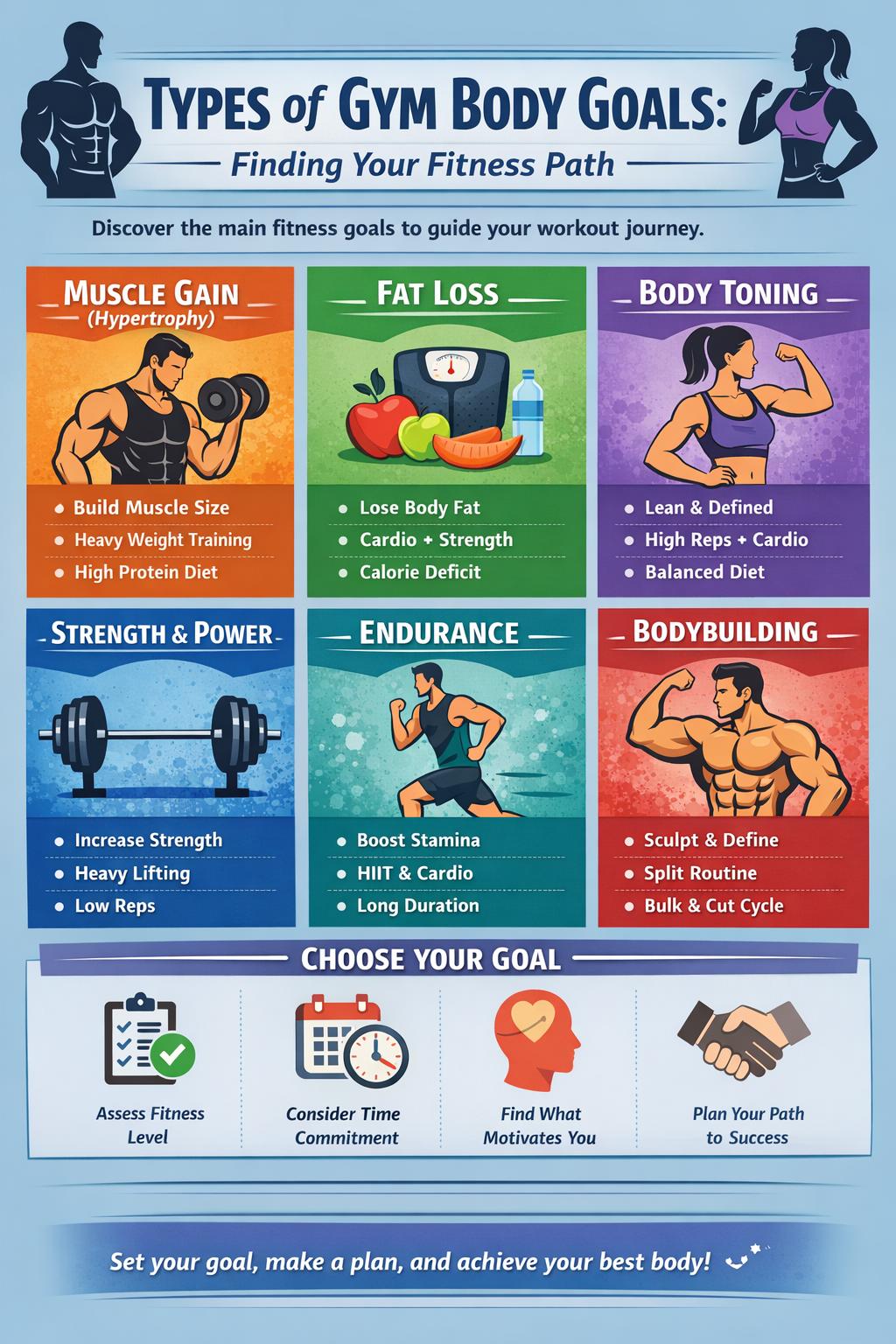
When it comes to fitness, not all goals are the same. Understanding the different types of gym body goals helps you choose a plan that fits your lifestyle, preferences, and physical abilities. Below, we break down the most common gym body goals and how to approach them effectively.
1. Muscle Gain / Hypertrophy Goals
Muscle gain, also called hypertrophy, is one of the most popular gym body goals. This goal focuses on increasing the size of your muscles through structured resistance training and nutrition.
Key Principles for Muscle Gain:
- Exercise Focus: Compound movements like squats, deadlifts, bench presses, pull-ups, and rows. Include isolation exercises for specific muscle groups (biceps curls, triceps extensions).
- Training Frequency: 3–6 days per week with a mix of heavy lifting (6–12 reps) and progressive overload.
- Nutrition Tips: Caloric surplus with high protein intake (1.2–2.2 g per kg of body weight), moderate carbs, and healthy fats.
- Tracking Progress: Measure muscle size, strength improvements, and overall body composition.
Case Study: A 2022 study in the Journal of Strength and Conditioning Research found that participants following a structured hypertrophy program gained an average of 1.5–2 kg of lean muscle mass in 8 weeks.
Common Mistakes:
- Ignoring recovery—muscles grow during rest.
- Not tracking protein intake.
- Overtraining small muscle groups.
2. Fat Loss / Weight Loss Goals
Fat loss or weight loss is a goal that focuses on reducing body fat while maintaining muscle mass. Unlike general weight loss, the aim here is to improve body composition, not just the number on the scale.
Key Principles for Fat Loss:
- Exercise Focus: A combination of strength training to preserve muscle and cardio (steady-state or HIIT) to burn calories.
- Nutrition Tips: Calorie deficit (burn more than you consume), high protein, fiber-rich foods, reduced processed sugar.
- Tracking Progress: Body fat percentage, waist circumference, progress photos, and energy levels.
Common Mistakes:
- Extreme calorie restriction causing muscle loss.
- Relying only on cardio without strength training.
- Expecting quick results—fat loss requires patience and consistency.
3. Body Toning / Lean Physique Goals
Toning is about creating a lean, defined, and aesthetically balanced physique. People pursuing toning goals usually aim for a low to moderate body fat percentage while maintaining or slightly increasing muscle mass.
Key Principles for Toning:
- Exercise Focus: Moderate weights with higher reps (12–20), combined with bodyweight exercises and cardio.
- Nutrition Tips: Balanced macronutrients, enough protein to maintain muscle, moderate carbs and fats.
- Tracking Progress: Visible muscle definition, strength retention, and clothing fit.
Tip: Toning is often misunderstood—it’s essentially muscle definition through fat reduction and muscle maintenance, not a separate category of exercise.
4. Strength & Power Goals
Strength-focused goals prioritize increasing maximal force output, not necessarily body aesthetics. This is ideal for powerlifters, athletes, or anyone wanting functional strength.
Key Principles for Strength:
- Exercise Focus: Heavy compound lifts (squats, deadlifts, bench press) at low reps (1–5) with high intensity.
- Training Frequency: 3–5 days per week with structured periodization (varying intensity and volume).
- Nutrition Tips: Caloric intake sufficient to maintain energy for heavy lifts, moderate protein, focus on nutrient-dense foods.
- Tracking Progress: Strength progression (heavier lifts, more reps at same weight).
Fun Fact: Strength training can improve bone density, joint stability, and hormonal balance, making it one of the most health-beneficial gym body goals.
5. Endurance & Athletic Performance Goals
Some gym-goers aim to improve stamina, cardiovascular capacity, or sport-specific performance rather than appearance. These goals focus on efficiency, endurance, and functionality.
Key Principles for Endurance:
- Exercise Focus: Long-duration cardio (running, cycling, swimming), high-rep resistance training, HIIT, and functional exercises.
- Nutrition Tips: Sufficient carbs for energy, moderate protein to prevent muscle breakdown, electrolytes for hydration.
- Tracking Progress: Distance, speed, heart rate recovery, or sport-specific performance metrics.
Example: Triathletes and marathon runners often combine gym strength training with cardio endurance workouts to optimize performance and reduce injury risk.
6. Aesthetic / Bodybuilding Goals
Aesthetic or bodybuilding goals are about sculpting the body for symmetry, proportion, and definition. This combines hypertrophy, fat loss, and posing techniques to achieve a visually impressive physique.
Key Principles for Bodybuilding Goals:
- Exercise Focus: Split routines targeting different muscle groups each day. Mix compound and isolation exercises for maximum definition.
- Nutrition Tips: Calorie cycling, high protein intake, and strategic carb manipulation to enhance muscle fullness and fat reduction.
- Tracking Progress: Progress photos, body measurements, and muscle symmetry evaluation.
Case Study: Competitive bodybuilders often follow 6–12 months of “bulking” followed by 2–3 months of “cutting” to maximize muscle growth while reducing body fat.
Visual Comparison Table: Types of Gym Body Goals
| Goal Type | Primary Focus | Exercise Style | Nutrition Focus | Key Tracking Metric |
|---|---|---|---|---|
| Muscle Gain | Size & strength | Weightlifting, resistance | High protein, calorie surplus | Lean muscle mass |
| Fat Loss | Body fat reduction | Cardio + strength training | Calorie deficit, protein focus | Body fat %, waist circumference |
| Body Toning / Lean Physique | Definition & shape | Moderate weights, cardio | Balanced macros | Muscle definition, strength |
| Strength & Power | Max force output | Heavy compound lifts | Energy-rich, moderate protein | Weight lifted, rep max |
| Endurance / Athletic Perf. | Stamina & performance | Cardio, HIIT, functional training | Carbs for energy, hydration | Distance, speed, heart rate |
| Aesthetic / Bodybuilding | Symmetry & definition | Split routines, hypertrophy | Calorie cycling, protein focus | Symmetry, body measurements |
How to Choose the Right Gym Body Goal for You
Choosing the right gym body goal is a crucial step that determines how effective your workouts, nutrition, and recovery will be. Not every goal fits every person, and attempting the wrong type of goal can lead to frustration, burnout, or even injury. Here’s a detailed guide to help you select the goal that’s right for you.
Assessing Your Current Fitness Level
Before picking a goal, it’s important to understand where you currently stand. Your fitness level will influence the intensity, duration, and type of workouts that are safe and effective for you.
Steps to Assess Fitness Level:
- Strength Tests: Bench press, squat, or deadlift maxes can indicate muscular strength.
- Cardio Assessment: Track running, cycling, or rowing performance over a set distance or time.
- Body Composition Analysis: Measure body fat percentage, lean muscle mass, and BMI.
- Flexibility and Mobility Check: Evaluate joint mobility and flexibility to prevent injuries.
Tip: Beginners may benefit from starting with general fitness or toning goals before advancing to muscle gain or strength-focused plans.
Considering Lifestyle and Time Commitment
Your lifestyle heavily influences which gym body goal is realistic. Different goals require varying time, dedication, and recovery.
- Muscle Gain & Bodybuilding: Requires multiple gym sessions per week, meal prepping, and recovery days.
- Fat Loss: Often requires consistent cardio and calorie tracking but may be flexible with gym time.
- Endurance & Athletic Performance: Demands longer workout sessions, cross-training, and sometimes outdoor activities.
Questions to Ask Yourself:
- How many days per week can I realistically commit to the gym?
- Do I have time to meal prep and track nutrition?
- Am I willing to prioritize recovery, sleep, and supplements if needed?
Choosing a goal aligned with your lifestyle prevents burnout and increases your chances of long-term success.
Personal Preferences and Motivation
Your personal interests and what motivates you are critical when selecting a gym body goal. The most successful fitness journeys are those that combine enjoyment with purpose.
- Do you enjoy lifting heavy weights or prefer high-intensity cardio?
- Are you motivated by visual results (muscle definition, lean physique) or performance metrics (strength, stamina)?
- Does competing or measuring progress through numbers inspire you, or do you prefer aesthetic changes?
Fact: A 2020 study in Frontiers in Psychology found that individuals who chose fitness programs aligned with personal interests were 70% more likely to stay consistent for six months or longer.
Combining Multiple Goals Safely
Some people may want to pursue more than one goal simultaneously, such as building muscle while losing fat (body recomposition). While possible, it requires careful planning:
Tips for Combining Goals:
- Prioritize one primary goal and treat others as secondary.
- Adjust workouts—alternate strength and cardio sessions strategically.
- Monitor nutrition carefully—protein intake for muscle preservation, moderate calorie deficit for fat loss.
- Track progress using multiple metrics (weight, body fat %, strength improvements).
Caution: Trying to achieve too many goals at once without proper guidance can lead to overtraining, injury, or stagnation.
Summary Table: Choosing Your Gym Body Goal
| Factor | Consideration | Example |
|---|---|---|
| Fitness Level | Beginner, Intermediate, Advanced | Beginner may start with toning or fat loss |
| Time Commitment | Hours/week available for training and prep | Limited time → focus on fat loss or toning |
| Personal Motivation | Aesthetics vs. performance vs. health | Motivated by strength → strength & power goals |
| Lifestyle & Recovery | Sleep, nutrition, stress levels | Busy lifestyle → avoid high-frequency bodybuilding |
| Goal Combination | Single vs. multiple goals | Muscle gain + fat loss → recomposition plan |
Creating a Gym Plan Based on Your Body Goal
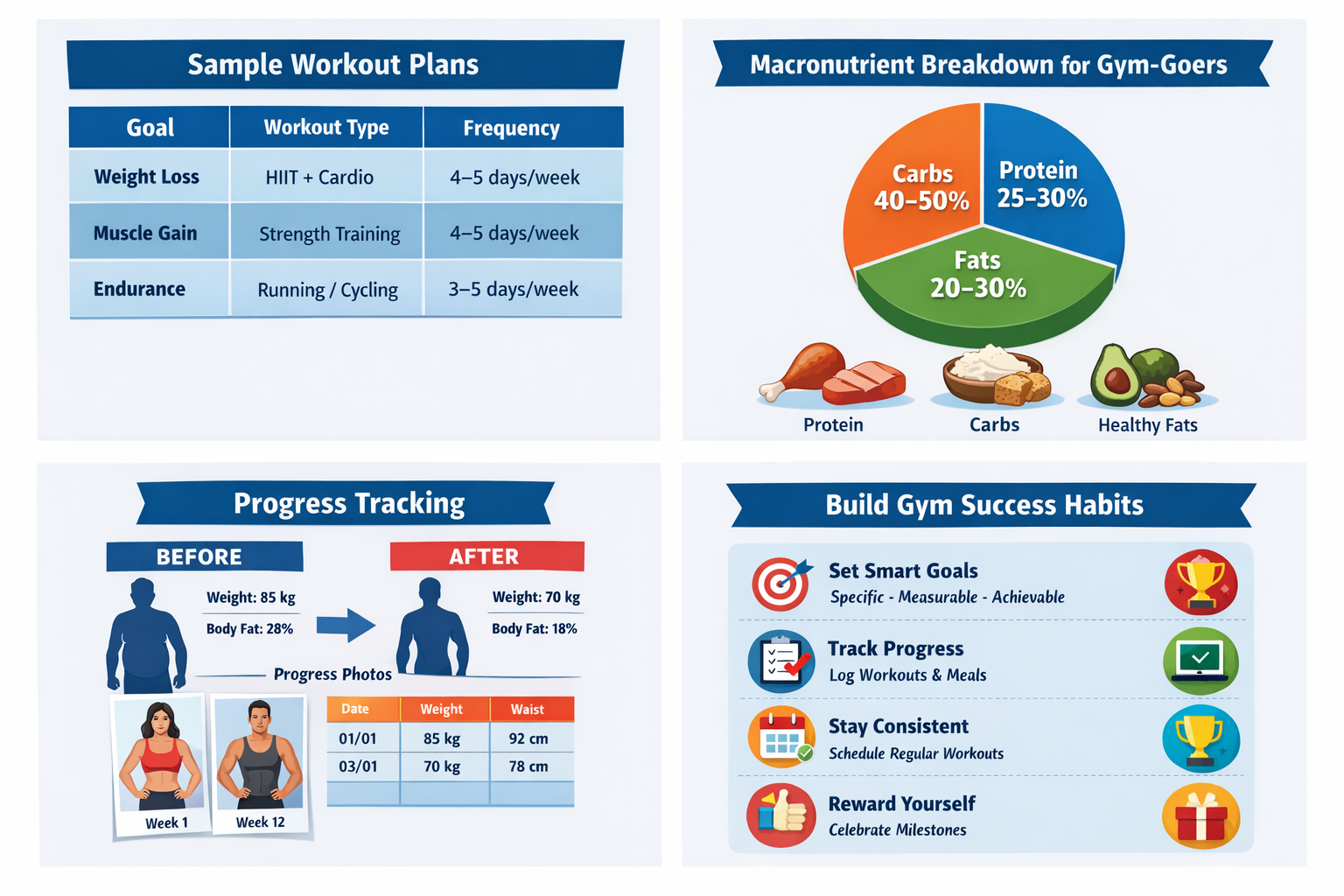
Once you’ve chosen your gym body goal, the next step is to create a structured plan that aligns with that goal. A well-rounded plan includes three key components: workouts, nutrition, and progress tracking. The combination of these elements ensures efficiency and consistency in achieving results.
Workout Plans for Each Goal Type
Different body goals require different training approaches. Here’s a detailed guide for each:
| Goal Type | Workout Focus | Example Routine |
|---|---|---|
| Muscle Gain | Strength + hypertrophy, compound & isolation | 4–5 days/week: Squat, Deadlift, Bench Press, Rows, Biceps/Triceps work |
| Fat Loss | Cardio + resistance training | 5 days/week: 3 days HIIT or steady-state cardio, 2 days full-body resistance |
| Body Toning / Lean Physique | Moderate weights + higher reps, cardio | 4 days/week: Full-body circuits, 12–20 reps, 20–30 min cardio |
| Strength & Power | Heavy compound lifts, low reps | 3–5 days/week: Squat, Bench, Deadlift, Overhead Press, 1–5 reps per set |
| Endurance / Athletic Perf. | Cardio & functional training | 5–6 days/week: Running, cycling, HIIT, functional exercises |
| Aesthetic / Bodybuilding | Split routines targeting all muscle groups | 5–6 days/week: Chest/Back, Legs, Shoulders/Arms, Core, high volume sets |
Tip: Always include warm-up and cool-down routines to prevent injury and improve performance.
Nutrition Plans for Different Body Goals
Your diet plays a huge role in achieving gym body goals. Here’s a breakdown:
| Goal Type | Nutrition Focus | Key Tips |
|---|---|---|
| Muscle Gain | Caloric surplus, high protein | 1.5–2.2 g protein/kg, moderate carbs, healthy fats |
| Fat Loss | Caloric deficit, protein-focused | Track calories, eat whole foods, avoid processed sugar |
| Body Toning / Lean Physique | Balanced macros, moderate protein | Focus on nutrient-dense meals, maintain protein to preserve muscle |
| Strength & Power | Sufficient energy, protein for recovery | Carb intake pre-workout for energy, protein post-workout |
| Endurance / Athletic Perf. | High carbs, moderate protein | Carbs for energy, electrolytes, hydration critical |
| Aesthetic / Bodybuilding | Protein-rich, calorie cycling for bulk & cut | Bulking phase: calorie surplus; cutting: deficit with protein maintenance |
Fact: Studies show that protein intake is critical for muscle preservation during fat loss, with 1.6–2.2 g per kg of body weight being optimal.
Tracking Progress and Adjusting Goals
Tracking progress allows you to see what works and what needs adjustment. Depending on your gym body goal, you can track:
- Muscle Gain: Measure lean muscle mass using calipers, bioelectrical impedance, or progress photos.
- Fat Loss: Track body fat percentage, waist/hip measurements, or progress photos weekly.
- Strength: Track your lifts (weight, reps, and sets) and monitor PRs (personal records).
- Endurance: Measure distance, speed, heart rate recovery, or performance in sport-specific activities.
- Aesthetic Goals: Track symmetry and proportion using photos and measurements.
Tips for Effective Tracking:
- Use apps or journals to log workouts and nutrition.
- Take weekly or bi-weekly progress photos.
- Adjust calories, workout intensity, or exercise selection if progress stalls.
- Celebrate small wins to maintain motivation.
Pro Tip: Progress is rarely linear. Plateaus are normal, so focus on consistency and gradual improvement rather than instant results.
Common Mistakes When Chasing Gym Body Goals
Even with a well-structured plan, many people struggle to achieve their gym body goals due to common mistakes. Understanding these errors can save time, prevent frustration, and reduce the risk of injury.
1. Unrealistic Expectations and Impatience
One of the biggest mistakes is expecting instant results. Muscle gain, fat loss, or body toning takes time and consistency. For example:
- Muscle gain: On average, beginners gain 0.25–0.5 kg of lean muscle per week under a proper program.
- Fat loss: A safe and sustainable rate is 0.5–1 kg per week.
Tip: Focus on small, measurable improvements instead of comparing yourself to others or aiming for drastic changes in weeks.
2. Skipping Nutrition or Recovery
Many gym-goers underestimate the importance of nutrition and rest. Workout intensity alone is not enough to achieve body goals:
- Nutrition Mistakes: Not eating enough protein, skipping meals, or relying on processed foods.
- Recovery Mistakes: Ignoring sleep, overtraining, and skipping rest days.
Fact: According to the National Sleep Foundation, 7–9 hours of quality sleep per night is crucial for muscle recovery, fat loss, and overall performance.
3. Copying Others Without Personalization
Following a celebrity workout or a friend’s routine may not suit your body type, fitness level, or goals. What works for one person may not work for you.
Tip: Customize your plan based on your goal type, current fitness, and lifestyle rather than blindly following trends.
4. Ignoring Flexibility and Mobility
Strength, endurance, and hypertrophy programs often overlook flexibility and mobility, which are essential for:
- Preventing injuries
- Improving performance
- Enhancing exercise efficiency
Incorporate stretching, foam rolling, yoga, or mobility drills into your weekly plan to ensure long-term success.
5. Inconsistent Tracking of Progress
Without tracking, it’s impossible to know if your plan is effective. Many people:
- Skip logging workouts
- Ignore body measurements
- Fail to adjust their nutrition or training when progress stalls
Tip: Use apps, journals, or photos to monitor changes. Adjust training intensity or nutrition based on measurable results.
Summary of Common Mistakes
| Mistake | Impact | Solution |
|---|---|---|
| Unrealistic Expectations | Frustration, loss of motivation | Set achievable short-term & long-term goals |
| Skipping Nutrition or Recovery | Slower results, fatigue, muscle loss | Prioritize protein, sleep, and recovery days |
| Copying Others Without Personalization | Inefficient workouts, possible injuries | Customize workouts & diet based on your goal |
| Ignoring Flexibility & Mobility | Increased risk of injury, poor performance | Include stretching & mobility exercises |
| Not Tracking Progress | Stagnation, lack of awareness | Log workouts, nutrition, and measurements |
Avoiding these mistakes helps ensure your gym body goal journey is efficient, safe, and sustainable.
Frequently Asked Questions About Gym Body Goals
When it comes to achieving gym body goals, people often have many questions. Below are the most common ones, answered with clear, practical guidance.
1. How long does it take to achieve different gym body goals?
The timeline depends on the goal, current fitness level, and consistency:
- Muscle Gain: Beginners can gain 1–2 kg of lean muscle per month, while advanced lifters may gain slower.
- Fat Loss: Safe fat loss is 0.5–1 kg per week. Extreme diets may cause faster loss but can harm muscle retention.
- Body Toning: Noticeable toning can appear in 6–12 weeks, depending on muscle development and fat percentage.
- Strength & Power: Strength gains may be measurable in 4–8 weeks, but peak performance requires months of consistent training.
- Endurance Goals: Improvement in stamina is gradual; measurable gains typically appear in 6–10 weeks.
Tip: Patience and consistency are key. Short-term results are less important than long-term sustainable progress.
2. Can I lose fat and gain muscle at the same time?
Yes, this is known as body recomposition. However, it requires careful planning:
- Resistance training is essential to stimulate muscle growth.
- Moderate calorie intake: Slight deficit to lose fat while providing enough protein for muscle gain.
- Protein intake: 1.6–2.2 g per kg of body weight.
Important: Body recomposition is usually slower than focusing on a single goal, but it’s highly effective for transforming physique without drastic bulking or cutting cycles.
3. Should I focus on cardio or weights for my goal?
It depends on your primary goal:
- Muscle Gain / Bodybuilding: Prioritize weights; cardio is secondary.
- Fat Loss: Combine cardio and resistance training.
- Strength & Power: Focus on heavy lifting; minimal cardio to avoid energy depletion.
- Endurance / Athletic Performance: Cardio-focused with some resistance training for stability and injury prevention.
Pro Tip: Even muscle gain or strength-focused routines benefit from moderate cardio for cardiovascular health.
4. How important is sleep and recovery for body goals?
Recovery is just as important as training:
- Sleep supports muscle repair, hormone regulation, and fat loss.
- Overtraining without recovery can lead to plateaus, injuries, and fatigue.
- Aim for 7–9 hours of sleep per night, and include rest days in your training program.
5. Can beginners achieve aesthetic goals quickly?
Beginners often see “newbie gains”, meaning rapid early progress in muscle growth and fat loss. However:
- Significant aesthetic changes usually require 3–6 months of consistent training and proper nutrition.
- Sustainable results require long-term consistency, not quick fixes.
Fact: Studies show beginners can gain up to 2 kg of muscle in the first 8 weeks of resistance training when following structured programs.
6. Can I combine multiple goals like muscle gain and fat loss?
Yes, but prioritize one goal at a time for maximum efficiency:
- Use resistance training to maintain or grow muscle while in a slight caloric deficit.
- Adjust nutrition and cardio intensity based on which goal is primary.
- Track multiple metrics (strength, body fat %, lean mass) to monitor progress.
Conclusion: Choosing and Achieving Your Ideal Gym Body Goal
Understanding the types of gym body goals is the first step toward creating a fitness journey that is effective, enjoyable, and sustainable. Whether your goal is muscle gain, fat loss, toning, strength, endurance, or aesthetic bodybuilding, the key to success lies in clarity, consistency, and a well-structured plan.
Key Takeaways:
- Set Clear Goals: Define what you want to achieve and why. Goals guide your workouts, nutrition, and recovery strategies.
- Align Workouts with Your Goal: Each body goal requires a specific training approach—choose exercises, reps, and intensity that fit your target.
- Prioritize Nutrition and Recovery: Fuel your body correctly and allow it to rest. Without proper nutrition and sleep, progress will be slow or stagnant.
- Track Progress: Use photos, measurements, strength tracking, and body composition analysis to monitor your results and adjust your plan.
- Avoid Common Mistakes: Don’t rush, don’t copy blindly, and don’t ignore mobility or recovery. Focus on consistency over perfection.
- Stay Patient and Motivated: Fitness is a long-term journey. Celebrate small wins and stay committed to your plan.
Motivational Insight: Achieving your ideal body is not about quick fixes—it’s about creating healthy habits, enjoying the process, and improving your body step by step. Even small daily improvements add up to transformative results over time.
No matter your starting point, with the right goal, plan, and mindset, anyone can achieve their gym body goal. Take the first step today, stay consistent, and watch your fitness vision become reality.