
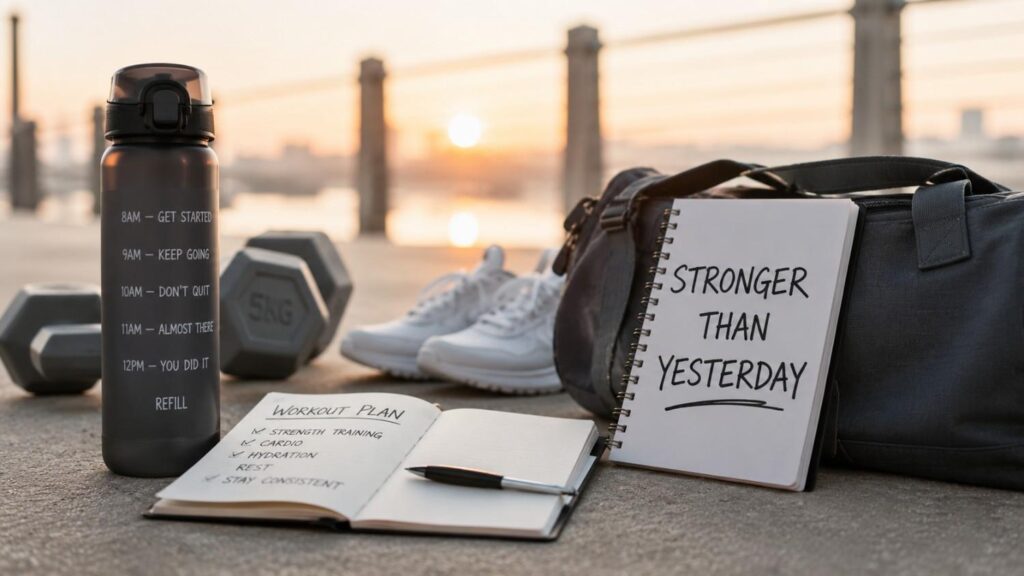
How to Stay Motivated on Your Fitness Journey
Learning How to Stay Motivated on Your Fitness Journey is not about feeling excited every day or waiting for the perfect mood to start working out. Real fitness progress comes from building steady habits, setting goals that make sense for your life, and creating a routine you can return to even when motivation feels low. Many people begin with strong energy, but after a few weeks, daily responsibilities, slow results, stress, or tiredness can make consistency difficult.
A successful fitness journey is not built on perfection. It is built on repeatable actions. You do not need to train like an athlete, follow an extreme diet, or spend hours in the gym to improve your health. What matters most is having a practical plan that supports your body, schedule, and mindset. Regular physical activity can support heart health, improve mood, help with sleep, build strength, and lower the risk of several long-term health problems, according to trusted health organizations such as the CDC and World Health Organization.
In this article, you will learn practical fitness motivation strategies, simple habit-building methods, workout consistency tips, and mindset shifts that can help you keep going. Whether you are a beginner or returning after a break, these steps will help you stay focused, avoid common setbacks, and build a healthier routine that lasts.
Understand Why Motivation Comes and Goes
Motivation is helpful, but it is not always reliable. Some days you may feel excited to exercise, eat better, and follow your workout plan. Other days, you may feel tired, distracted, or discouraged. This does not mean you are lazy or failing. It simply means you are human. Motivation naturally rises and falls depending on your sleep, stress level, mood, environment, and how quickly you think you should see results.
One of the biggest mistakes people make is believing they must feel motivated before they take action. In reality, action often comes first, and motivation follows later. When you complete a short workout, go for a walk, or prepare a healthy meal, you create a small win. That win can build confidence and make the next healthy choice easier. Over time, these repeated actions become part of your routine.
Understanding this pattern is important because it helps you stop judging yourself when motivation drops. Instead of asking, “Why am I not motivated?” ask, “What system can help me move today?” This mindset makes your fitness journey more stable and less emotional. It also helps you build discipline in a way that feels manageable, not harsh or unrealistic.
Motivation Is a Feeling, Not a Full Plan
Motivation is a feeling, and feelings change often. You may feel motivated after watching a fitness video, buying new gym clothes, or setting a fresh goal at the beginning of the month. But if your plan depends only on that feeling, it can fall apart when real life gets busy. Work pressure, family responsibilities, poor sleep, or slow progress can quickly reduce workout motivation.
A better approach is to build a plan that works even when your mood is not perfect. This means choosing your workout days ahead of time, knowing what exercises you will do, and having a backup option for busy days. For example, if you cannot complete a 45-minute gym workout, you can still do a 15-minute home workout or take a brisk walk.
This type of planning turns fitness motivation into a practical system. You are no longer waiting to feel ready. You are following a simple routine. That shift makes it easier to stay consistent with exercise because your next step is clear, realistic, and not dependent on emotion.
Discipline Works Better When It Feels Simple
Discipline is often misunderstood. Many people think discipline means forcing yourself through hard workouts even when you are exhausted. But in a healthy fitness journey, discipline should feel simple and repeatable. It means making small choices that support your goals, even when you do not feel fully motivated. This could mean doing a shorter workout, stretching for ten minutes, or walking after dinner instead of skipping movement completely.
Simple discipline works because it lowers pressure. If your plan feels too difficult, your brain will look for reasons to avoid it. But if the first step feels easy, you are more likely to begin. For beginners, this is especially important. Starting with intense workouts can lead to soreness, frustration, and burnout. Starting slowly allows your body and mind to adjust.
A simple routine might include three workouts per week, daily walks, or short bodyweight exercises at home. Once that becomes easier, you can increase time, intensity, or resistance. The goal is not to prove how hard you can train. The goal is to create a routine you can repeat long enough to see real progress.
Set Fitness Goals You Can Actually Follow
Fitness goals give your journey direction. Without clear goals, it becomes easy to feel lost, bored, or discouraged. However, not all goals are helpful. A vague goal like “I want to get fit” may sound good, but it does not tell you what to do next. A clear goal gives you a specific action, timeline, and way to measure progress.
The most useful fitness goals are realistic, personal, and connected to your current lifestyle. If you are new to exercise, your goal should not be to train six days per week immediately. A better goal may be to complete three workouts per week for one month or walk for 30 minutes five days per week. These goals are clear and easier to follow.
It is also important to set goals that go beyond appearance. Weight loss, muscle gain, and body shape can be valid goals, but they usually take time. If you only focus on how your body looks, you may lose motivation before you notice visible results. Add goals related to energy, strength, mood, sleep, and consistency. These areas often improve earlier and can keep you encouraged while your physical results develop.
Use SMART Goals for Better Workout Consistency
SMART goals are specific, measurable, achievable, realistic, and time-based. This method helps turn a general wish into a practical action plan. Instead of saying, “I want to exercise more,” a SMART goal would be, “I will complete three 30-minute workouts every week for the next four weeks.” This goal is clear because you know what to do, how often to do it, and when to review your progress.
SMART goals improve workout consistency because they reduce confusion. When your goal is too broad, you may waste energy deciding what counts as progress. But when your goal is specific, you can track it easily. You either completed your planned workouts or you did not. This makes it easier to adjust without overthinking.
In my experience, the best SMART goals are slightly challenging but still realistic. If your current activity level is low, start smaller. For example, commit to two workouts per week instead of five. Once you prove consistency, you can build from there. This creates confidence and lowers the chance of quitting early.
Focus on Process Goals, Not Only Results
Result goals are outcomes you want, such as losing weight, building muscle, improving stamina, or feeling more confident. These goals can be useful, but they are not fully under your daily control. Your results may depend on many factors, including sleep, nutrition, stress, hormones, training history, and genetics. This is why process goals are so important.
Process goals focus on actions you can control. Examples include going to the gym three times per week, walking after lunch, drinking more water, preparing meals at home, or completing a weekly strength training session. These actions may look small, but they create the foundation for bigger results.
Focusing on process goals also protects your motivation. If the scale does not move for a week, you can still feel successful because you completed your workouts and followed your plan. That sense of progress matters. It teaches you that success is not only about the final result. Success is also showing up, building discipline, and becoming more consistent with healthy habits.
| Goal Type | Example | Why It Helps |
|---|---|---|
| Process Goal | Walk 30 minutes 5 days weekly | Builds daily movement |
| Strength Goal | Complete 2 strength sessions weekly | Supports muscle and confidence |
| Habit Goal | Prepare workout clothes before bed | Reduces morning excuses |
| Recovery Goal | Sleep 7–8 hours when possible | Supports energy and performance |
| Nutrition Goal | Add protein to each main meal | Supports training and fullness |
Build a Routine That Fits Your Real Life
A workout routine only works if it fits your actual life. Many people fail because they choose plans that look impressive but do not match their schedule, energy level, or responsibilities. If your routine requires too much time, too much equipment, or too much mental effort, it becomes harder to maintain. A sustainable exercise routine should feel structured but flexible.
Start by looking at your weekly schedule honestly. Identify the days and times when exercise is most realistic. Some people train better in the morning because there are fewer distractions. Others prefer evenings because their body feels more awake. There is no perfect time for everyone. The best time to work out is the time you can repeat consistently.
Your routine should also match your fitness level. Beginners often need shorter workouts, more recovery, and simpler exercises. Advanced exercisers may need more detailed programming, progressive overload, and planned recovery days. Both groups need structure. The difference is how much intensity and volume they can handle.
A real-life fitness routine should include movement you enjoy, enough rest, and backup options for busy days. When your plan feels realistic, you are more likely to keep going even during stressful weeks.
| Fitness Situation | Recommended Approach | Why It Works |
|---|---|---|
| Busy work schedule | Short 15–30 minute workouts | Easier to stay consistent even on busy days |
| Beginner to exercise | Start with 2–3 workouts per week | Reduces burnout and builds confidence |
| Limited equipment | Bodyweight or resistance band workouts | Removes barriers to getting started |
| Low daily energy | Exercise during your most productive hours | Improves the chance of completing workouts |
| Frequent travel | Keep a simple hotel or home workout plan | Maintains routine despite schedule changes |
| Family responsibilities | Schedule workouts like appointments | Helps protect dedicated exercise time |
Choose Workouts You Enjoy Enough to Repeat
You do not need to love every minute of exercise, but you should choose workouts you can tolerate and repeat. Enjoyment is a major part of long-term fitness motivation. If your workout feels like punishment, you will eventually start avoiding it. But if your routine includes activities you like, exercise becomes easier to maintain.
There are many ways to stay active. You can walk, cycle, swim, dance, lift weights, do yoga, join a fitness class, play sports, or follow home workouts. Each option can support a healthy lifestyle when done consistently. The right choice depends on your goals, comfort level, available time, and personal preferences.
For example, if running feels painful or boring, try brisk walking or cycling. If the gym feels overwhelming, begin with bodyweight workouts at home. If solo workouts feel lonely, join a group class or train with a friend. Fitness does not have to look one specific way. The more your routine matches your personality, the easier it becomes to stay consistent with exercise.
Make Exercise Easy to Start
The hardest part of working out is often starting. Once you begin, the session usually feels more manageable. This is why reducing friction is so important. Friction means anything that makes exercise harder to begin. It may be not knowing what workout to do, not having clean gym clothes, choosing a gym too far away, or planning sessions that are too long for your schedule.
You can reduce friction by preparing your workout environment in advance. Keep your shoes, clothes, water bottle, and headphones ready. Save your workout plan on your phone. Choose a gym near your home or workplace. If you train at home, keep your mat, dumbbells, or resistance bands in a visible place.
You should also create a short backup workout. This could be 10 squats, 10 push-ups, 10 minutes of walking, or a short stretching routine. A backup plan helps you stay active on busy days. It also protects the habit. Even when you cannot complete the full workout, you still keep your identity as someone who moves.
Track Progress Without Becoming Obsessed
Tracking progress can help you stay motivated, but it should not become a source of stress. Many people only track body weight, then feel discouraged when the number does not change quickly. Weight can fluctuate because of water, food intake, muscle gain, stress, sleep, and hormones. It is only one measurement, not the full story of your fitness journey.
A better approach is to track several signs of progress. You may notice that your clothes fit better, your strength improves, your breathing feels easier, your energy increases, or your mood improves after workouts. These changes matter. They show that your body is responding even when visible results take time.
Progress tracking also helps you make smarter decisions. If you are missing workouts often, your routine may be too hard or poorly scheduled. If you feel tired all the time, you may need more recovery or better nutrition. If your strength is improving, your plan may be working well.
The goal is to use tracking as feedback, not judgment. Review your progress with patience. Fitness is not a straight line. Some weeks will be better than others, but consistent effort over time creates meaningful results.
| Progress Indicator | What It Can Tell You | How Often to Review |
|---|---|---|
| Workout completion | Shows consistency and habit strength | Weekly |
| Strength improvements | Indicates increasing fitness and muscle performance | Every 2–4 weeks |
| Energy levels | Reflects recovery and overall wellness | Weekly |
| Sleep quality | Helps identify recovery and lifestyle patterns | Weekly |
| Body measurements | Shows physical changes beyond body weight | Every 4 weeks |
| Endurance | Measures improvements in cardiovascular fitness | Every 2–4 weeks |
Track Small Wins That Show Real Progress
Small wins are powerful because they make progress visible. If you only wait for major results, you may feel discouraged. But when you track small improvements, you can see that your effort is working. A small win could be completing all planned workouts for the week, walking more steps than last month, lifting slightly heavier weights, sleeping better, or feeling less stressed.
These wins build confidence. They remind you that your fitness journey is moving forward even when progress feels slow. For beginners, this is especially important because visible body changes can take time. Strength, stamina, and mood improvements may appear earlier than major physical changes.
Useful things to track include workout completion, active minutes, step count, strength numbers, energy levels, sleep quality, mood, and body measurements. You do not need to track everything. Choose two or three measurements that match your goals. For example, if your goal is workout consistency, track completed sessions. If your goal is strength, track sets, reps, and weights. Tracking should make your journey clearer, not more stressful.
Review Your Plan Every 2–4 Weeks
Your fitness plan should not stay the same forever. As your body adapts, your routine may need small changes. Reviewing your plan every two to four weeks helps you see what is working, what feels too difficult, and what needs adjustment. This prevents boredom and keeps your progress moving in the right direction.
During a review, ask simple questions. Did I complete most of my planned workouts? Did I feel too tired or sore? Did I enjoy the routine enough to continue? Am I seeing progress in strength, energy, mood, or endurance? These answers help you make practical changes.
If your workouts feel too easy, you can increase time, resistance, sets, or intensity. If your workouts feel too hard, you can reduce the volume, add rest days, or choose simpler exercises. This is not failure. It is smart planning. A fitness journey should grow with you. Regular reviews keep your plan realistic, personal, and sustainable instead of rigid or overwhelming.
Handle Setbacks Without Quitting
Setbacks are normal. Everyone misses workouts, loses focus, gets busy, or feels discouraged at some point. The difference between people who continue and people who quit is not the absence of setbacks. It is how quickly they return after a setback happens. A missed workout does not ruin your progress. A difficult week does not mean your fitness journey is over.
Many people make setbacks worse by thinking in all-or-nothing terms. They believe that if they cannot follow the plan perfectly, there is no point in continuing. This mindset is one of the biggest reasons people stop. Fitness does not require perfect effort. It requires repeated effort.
The best way to handle setbacks is to expect them in advance. Plan for busy days, travel, low-energy periods, and unexpected schedule changes. Keep a shorter workout option ready. Allow flexibility with your routine. Remind yourself that progress comes from what you do most of the time, not what happens on one imperfect day.
When you treat setbacks as part of the process, they lose their power. You become more resilient, more patient, and more likely to keep going.
Use the “Never Miss Twice” Rule
The “never miss twice” rule is a simple way to protect workout consistency. Missing one workout is normal. Missing many in a row can turn into a new pattern. This rule helps you return quickly before a short break becomes a long pause. If you miss Monday’s workout, do something active on Tuesday. It does not have to be perfect or intense. A walk, stretch session, or short home workout is enough to keep the habit alive.
This approach works because it removes guilt and focuses on action. Instead of thinking, “I failed,” you think, “I can restart today.” That small mental shift is powerful. It teaches you that consistency does not mean never missing a day. It means coming back quickly.
The rule also keeps your identity strong. You continue seeing yourself as someone who exercises and takes care of their health. Even during busy weeks, you are still connected to your routine. Over time, this mindset builds long-term discipline and reduces the fear of setbacks.
Stop Treating One Bad Day Like Failure
One bad day is not failure. It is simply one day. Many people lose fitness motivation because they overreact to small mistakes. They miss one workout and feel like they have ruined the week. They eat one unplanned meal and believe they have destroyed their progress. This kind of thinking creates guilt, and guilt often leads to quitting.
A healthier response is to look at the situation with curiosity. Ask yourself what made the day difficult. Were you tired? Was your workout too long? Did you forget to prepare? Were you stressed or hungry? These questions help you improve your plan instead of judging yourself.
Fitness success depends on patterns, not isolated moments. If you usually exercise, eat balanced meals, sleep well, and stay active, one difficult day will not erase that effort. Learn from it, adjust if needed, and return to your next healthy action. This keeps your mindset balanced and makes your fitness journey more sustainable.
Use Support, Accountability, and Environment
Motivation becomes easier when your surroundings support your goals. You do not have to rely only on willpower. Your environment, relationships, tools, and daily setup can either make fitness easier or harder. If you are surrounded by reminders, support, and simple systems, you are more likely to follow through.
Accountability is especially useful when motivation drops. This does not mean someone needs to pressure you. It means having a person, group, coach, app, or schedule that helps you stay connected to your goals. Some people do well with personal trainers because they need structure and expert guidance. Others prefer a workout partner, online community, or group fitness class.
Your physical environment matters too. If your workout clothes are hidden, your gym is far away, and your schedule is unclear, exercise becomes harder to start. But if your shoes are visible, your workout plan is ready, and your equipment is easy to access, the habit becomes simpler.
Support does not remove effort, but it reduces resistance. It makes your fitness journey feel less lonely and more practical.
Find Accountability That Matches Your Personality
Accountability works best when it matches your personality. Some people feel motivated by group challenges, fitness classes, or public progress updates. Others feel uncomfortable with that approach and prefer private tracking or one-on-one coaching. There is no single correct method. The best accountability system is the one that helps you stay consistent without making you feel pressured or judged.
A personal trainer can be helpful if you need a structured workout plan, proper exercise form, and regular check-ins. A workout partner can make exercise more enjoyable and help you show up when you feel tired. A fitness app can work well if you like tracking data and following reminders. A group class may be a good option if you enjoy energy, music, and social support.
Choose accountability that feels supportive. If a method causes stress, try another one. The goal is not to create pressure. The goal is to create connection, structure, and follow-through. When accountability feels natural, it can strengthen workout motivation and make your routine easier to maintain.
Design Your Space for Better Fitness Habits
Your environment has a strong effect on your behavior. If healthy choices are easy to see and easy to access, you are more likely to choose them. If exercise requires too many steps, you are more likely to avoid it. Designing your space for fitness does not need to be complicated. Small changes can make a big difference.
Place your workout clothes where you can see them. Keep your shoes near the door. Put your water bottle on your desk. If you exercise at home, keep basic equipment like a yoga mat, resistance bands, or dumbbells in an easy-to-reach place. If you use a workout app, place it on your phone’s home screen.
You can also improve your digital environment. Save a workout playlist, follow helpful fitness educators, and remove content that makes you compare yourself negatively. Your space should remind you of action, not perfection. When your environment supports your goals, exercise becomes less dependent on motivation and more connected to your daily routine.
Stay Motivated by Connecting Fitness to Your Life
Long-term fitness motivation becomes stronger when exercise is connected to your real life. Many people begin because they want to lose weight or change how they look. These goals are understandable, but appearance alone may not keep you motivated during hard weeks. Deeper reasons often create stronger commitment.
Fitness can support many parts of life. It can help you feel more energetic at work, sleep better, reduce stress, move with less discomfort, play with your children, feel stronger, or improve confidence. When you connect exercise to these daily benefits, your routine becomes more meaningful. You are no longer working out only for a future result. You are also improving how you feel and function today.
This mindset is helpful because visible results can take time. If your only reason for exercising is appearance, slow progress can feel discouraging. But if you notice better mood, stronger focus, improved stamina, or less stress, you have more reasons to continue.
A fitness journey should support your life, not control it. The goal is to become healthier in a way that makes everyday living better.
Know Your Personal “Why”
Your personal “why” is the deeper reason behind your fitness goals. It is the reason you continue when motivation feels low. Your “why” may be better health, more energy, improved confidence, lower stress, better sleep, or the ability to move comfortably as you age. It should be personal, meaningful, and connected to your life.
To find your “why,” ask yourself what you want fitness to help you do. Do you want to feel stronger at work? Do you want more energy for your family? Do you want to manage stress in a healthier way? Do you want to reduce health risks or feel more confident in your body? The clearer your answer, the easier it becomes to keep going.
Write your reason somewhere visible. You can place it in your phone notes, journal, or on your calendar. When you feel like skipping a workout, read it again. A strong reason can remind you that your fitness journey is not only about exercise. It is about building a better quality of life.
Make Fitness Part of Your Identity
One of the most powerful mindset shifts is to make fitness part of your identity. Instead of saying, “I am trying to work out,” begin thinking, “I am someone who takes care of my body.” This identity does not require perfection. It only requires repeated proof through small actions.
Every time you complete a workout, take a walk, stretch, drink water, or choose a balanced meal, you strengthen that identity. These actions may look small, but they build trust with yourself. Over time, you start to believe that fitness is not something temporary. It becomes part of who you are and how you live.
This mindset is especially useful during difficult periods. If you miss a workout, you do not see yourself as someone who failed. You see yourself as someone who needs to return to the routine. That difference matters. Identity-based habits help you stay consistent because your actions are connected to the person you are becoming, not only the result you want.
Quick Answer About How to Stay Motivated on Your Fitness Journey
The best way to stay motivated on your fitness journey is to stop depending only on motivation and start building a simple system. Motivation can help you begin, but habits help you continue when life gets busy. Start by setting realistic fitness goals, choosing workouts you can repeat, tracking small wins, and creating a routine that fits your schedule. You should also plan for setbacks because missed workouts, low-energy days, and slow progress are normal parts of the process.
A good approach is to focus on small daily actions instead of major overnight changes. For example, walking for 20 minutes, completing two strength workouts per week, or preparing your workout clothes the night before can make exercise easier to repeat. Support also matters. A workout partner, fitness class, coach, app, or simple progress tracker can keep you accountable. When you make fitness practical, personal, and flexible, it becomes much easier to stay consistent with exercise over the long term.
Frequently Asked Questions
Questions about fitness motivation are common because most people struggle with consistency at some point. Beginners often wonder how to start, while experienced exercisers may struggle with plateaus, boredom, or burnout. The answers below focus on practical steps you can use right away.
The most important thing to remember is that motivation is not the only tool you need. You also need structure, patience, support, and flexibility. When your plan is realistic, it becomes easier to keep going even when your energy or mood changes. These FAQs answer common People Also Ask style questions and help you understand how to stay motivated on your fitness journey without feeling overwhelmed.
How do I stay motivated to work out when I feel lazy?
When you feel lazy, lower the starting point. Do not force yourself to complete a long or difficult workout right away. Tell yourself you only need to move for five or ten minutes. This could be a short walk, light stretching, a few bodyweight exercises, or a quick home workout. Starting small removes pressure and makes action easier.
Many times, the hardest part is beginning. Once you start moving, your energy may improve. Even if you stop after ten minutes, you still protected the habit. That matters more than doing nothing. You can also prepare your clothes, playlist, and workout space ahead of time so there are fewer excuses. The goal is not to feel highly motivated every day. The goal is to take one small action that keeps your fitness routine alive.
Why do I keep losing fitness motivation?
You may keep losing fitness motivation because your plan is too hard, too vague, or not connected to your real life. Many people start with big goals and intense routines, but they do not build the structure needed to continue. If your workouts feel overwhelming or you do not see quick results, motivation can drop quickly.
To fix this, simplify your plan. Choose fewer workout days, shorter sessions, and clearer goals. Track small wins such as better energy, improved strength, or completed workouts. Also check whether you enjoy your routine. If you dislike every workout, it will be difficult to stay consistent.
Motivation also drops when you compare your progress to others. Your fitness journey should be based on your body, schedule, and goals. Focus on what you can repeat, not what looks impressive online.
How can beginners stay consistent with exercise?
Beginners can stay consistent with exercise by starting small and building gradually. A common mistake is doing too much too soon. This can lead to soreness, frustration, or burnout. Instead, begin with a simple routine such as two or three workouts per week, daily walking, or short home workouts.
The routine should be easy to understand and easy to repeat. Choose exercises that match your current fitness level. Schedule workouts like appointments and keep your workout clothes ready. It also helps to track completed sessions rather than focusing only on weight or appearance.
Beginners should focus on building confidence first. Once consistency improves, you can increase intensity, time, or resistance. Fitness is a long-term process. A steady beginner routine is more valuable than an intense plan that only lasts one week.
Is it better to work out at home or at the gym?
Both home workouts and gym workouts can be effective. The better option depends on your goals, comfort level, time, and personal preference. Home workouts are convenient, private, and easy to start. They are useful for beginners, busy people, or anyone who feels uncomfortable in a gym setting.
Gyms offer more equipment, classes, personal trainers, and a structured environment. They may be better if your goals include building strength, using machines, or following a more advanced workout plan. Some people also feel more motivated when they leave the house to exercise.
The best choice is the one you can repeat. You can also combine both. For example, use the gym for strength training and home workouts for stretching, mobility, or busy days. Consistency matters more than location.
What should I do when I feel like quitting my fitness journey?
When you feel like quitting, do not make a final decision during a low-energy moment. Instead, pause and reduce the difficulty. Ask yourself what feels too hard right now. Is your routine too intense? Are you tired? Are your goals unrealistic? Are you bored? The answer can help you adjust the plan instead of abandoning it.
Choose one small action to keep moving forward. Take a walk, stretch for ten minutes, complete a light workout, or review your goals. You can also speak with a coach, friend, or workout partner for support.
Feeling like quitting does not mean you are weak. It often means your plan needs adjustment. A flexible plan is easier to maintain than a strict one. Keep your routine simple until your motivation improves.
How long does it take to build a fitness habit?
There is no exact timeline that works for everyone. Building a fitness habit depends on your schedule, environment, goals, stress level, and how simple the habit is. Some people feel consistent after a few weeks, while others need more time. The key is not to chase a perfect number of days. The key is to repeat the habit often enough that it becomes part of your normal routine.
Start with actions that are easy to repeat. For example, walking after dinner, training every Monday and Thursday, or stretching before bed can become automatic over time. The more consistent the cue and action, the easier the habit becomes.
Do not worry if you miss a day. Return quickly and keep the pattern going. A fitness habit is built through repeated effort, not perfect execution.
Conclusion
Knowing How to Stay Motivated on Your Fitness Journey is not about finding endless excitement. It is about creating a routine that supports you when motivation changes. You need realistic goals, simple habits, enjoyable workouts, progress tracking, support, and a mindset that allows you to return after setbacks.
The most successful fitness journeys are built one step at a time. Start with what feels realistic. Focus on process goals. Track small wins. Choose workouts that fit your life. Make your environment supportive. Most importantly, do not quit because of one hard day or one missed workout. Progress comes from what you repeat most often.
If you are just starting, keep your plan simple. If you are returning after a break, begin again without guilt. Your fitness journey is personal, and every small action can move you forward.