Introduction
For anyone who spends hours in the gym, relaxation is just as important as the workout itself. Many gym-goers focus solely on lifting weights, running miles, or hitting personal records, but they often overlook how essential proper recovery and stress reduction are for maximizing results. Without adequate relaxation, the body struggles to repair muscles, regulate hormones, and maintain overall mental and physical health.
Relaxation techniques for gym goers are designed to help the body and mind recover from intense exercise. By incorporating simple yet effective strategies like breathing exercises, stretching, meditation, and foam rolling, gym enthusiasts can reduce muscle soreness, improve flexibility, prevent injuries, and even enhance mental focus for future workouts.
Why Gym Goers Need Relaxation Techniques
While many gym-goers focus on the intensity and volume of their workouts, relaxation is often underestimated, yet it is a fundamental component of overall fitness. The body and mind require dedicated time to recover, repair, and restore balance after physical exertion. Implementing relaxation techniques for gym goers can dramatically improve performance, prevent injuries, and support long-term health.
The Role of Recovery in Fitness
Recovery is not simply resting; it is an active physiological process where the body repairs tissues, replenishes energy stores, and restores hormonal balance. After strenuous exercise, muscles experience micro-tears, glycogen stores are depleted, and the nervous system undergoes stress. Without adequate recovery, these processes remain incomplete, leading to fatigue, reduced strength, and increased risk of overtraining.
Key recovery benefits of relaxation techniques include:
- Muscle repair and growth: Techniques like stretching, yoga, and foam rolling improve blood flow, delivering oxygen and nutrients to damaged tissues.
- Hormonal balance: Relaxation reduces cortisol levels and supports the production of growth hormone, which is critical for muscle development and fat metabolism.
- Enhanced mental focus: Recovery techniques calm the nervous system, reduce mental fatigue, and improve concentration for future workouts.
Case Study: A study in Sports Medicine found that athletes who incorporated post-workout relaxation routines, including stretching and meditation, showed a 20% faster recovery of muscle function compared to those who did not. This demonstrates that targeted relaxation is not optional—it’s essential for progress.
Stress and Its Impact on Workout Performance
Exercise itself is a form of stress, and while controlled stress improves fitness, chronic stress can negatively impact your results. Physical stress from intense training combined with mental or emotional stress can lead to elevated cortisol levels, which:
- Impairs muscle growth by reducing protein synthesis.
- Increases fat storage, particularly around the abdomen.
- Reduces motivation and energy, making workouts feel harder than they should.
- Disrupts sleep, which is critical for recovery and overall performance.
By practicing relaxation techniques for gym goers, individuals can manage both physical and mental stress. Methods such as deep breathing, meditation, and progressive muscle relaxation are proven to lower cortisol, slow heart rate, and improve parasympathetic nervous system activation—the “rest and digest” state that promotes healing and recovery.
Common Signs That You Need More Relaxation
Even dedicated gym-goers may not realize when their bodies are stressed or under-recovered. Recognizing the signs early can prevent injuries and support better performance. Common indicators include:
- Persistent muscle soreness that lasts more than 48–72 hours.
- Chronic fatigue or lack of energy, even after sleep.
- Irritability or mood swings, often linked to elevated cortisol levels.
- Difficulty sleeping or frequent waking during the night.
- Plateau in strength or endurance gains, despite consistent training.
Pro Tip: Using a recovery journal or fitness tracker can help monitor fatigue levels, workout intensity, and sleep quality. Over time, patterns emerge, indicating when your body needs more relaxation and recovery time.
Why Relaxation Should Be Part of Every Gym Routine
Integrating relaxation techniques into your gym routine is not just for elite athletes—it’s crucial for anyone who trains regularly. Proper relaxation:
- Accelerates recovery between workouts.
- Reduces risk of injury by addressing muscle tightness and imbalances.
- Supports mental clarity, reducing stress and improving focus during workouts.
- Enhances long-term performance, allowing consistent progress without burnout.
Insight: Even 10–15 minutes of targeted relaxation after a workout can significantly improve muscle recovery and mental clarity. Over weeks and months, these small investments in relaxation yield major improvements in overall fitness and well-being.
Top Relaxation Techniques for Gym Goers
Recovery and relaxation are not one-size-fits-all. Gym-goers benefit most when they incorporate a variety of relaxation techniques, targeting both physical and mental recovery. Below, we explore the most effective methods in detail.
Deep Breathing Exercises
Deep breathing is one of the simplest yet most powerful relaxation techniques for gym goers. Controlled breathing helps regulate the nervous system, reduce stress, and improve oxygen delivery to muscles, aiding recovery.
How to Practice Diaphragmatic Breathing:
- Sit or lie in a comfortable position.
- Place one hand on your chest and the other on your abdomen.
- Inhale deeply through your nose, allowing your abdomen to rise while keeping your chest still.
- Exhale slowly through your mouth, feeling your abdomen fall.
- Repeat for 5–10 minutes, focusing on slow, steady breaths.
Benefits:
- Reduces cortisol levels and heart rate.
- Improves mental focus and relaxation.
- Enhances oxygen flow to fatigued muscles.
Quick Tip: Perform deep breathing immediately after your workout to jumpstart recovery and calm the nervous system.
Progressive Muscle Relaxation (PMR)
Progressive Muscle Relaxation is a technique that involves tensing and then relaxing each muscle group to relieve tension and promote recovery. It is particularly effective for gym-goers who experience post-workout tightness or stiffness.
Step-by-Step PMR:
- Start from your toes and gradually move upward to your head.
- Tense each muscle group for 5–10 seconds.
- Release the tension slowly and focus on the sensation of relaxation.
- Continue through legs, abdomen, chest, arms, shoulders, and face.
Benefits:
- Relieves post-exercise muscle tightness.
- Enhances body awareness and helps identify areas of tension.
- Promotes deeper, more restorative sleep.
Pro Tip: Combine PMR with slow breathing to amplify relaxation effects.
Stretching and Yoga for Relaxation
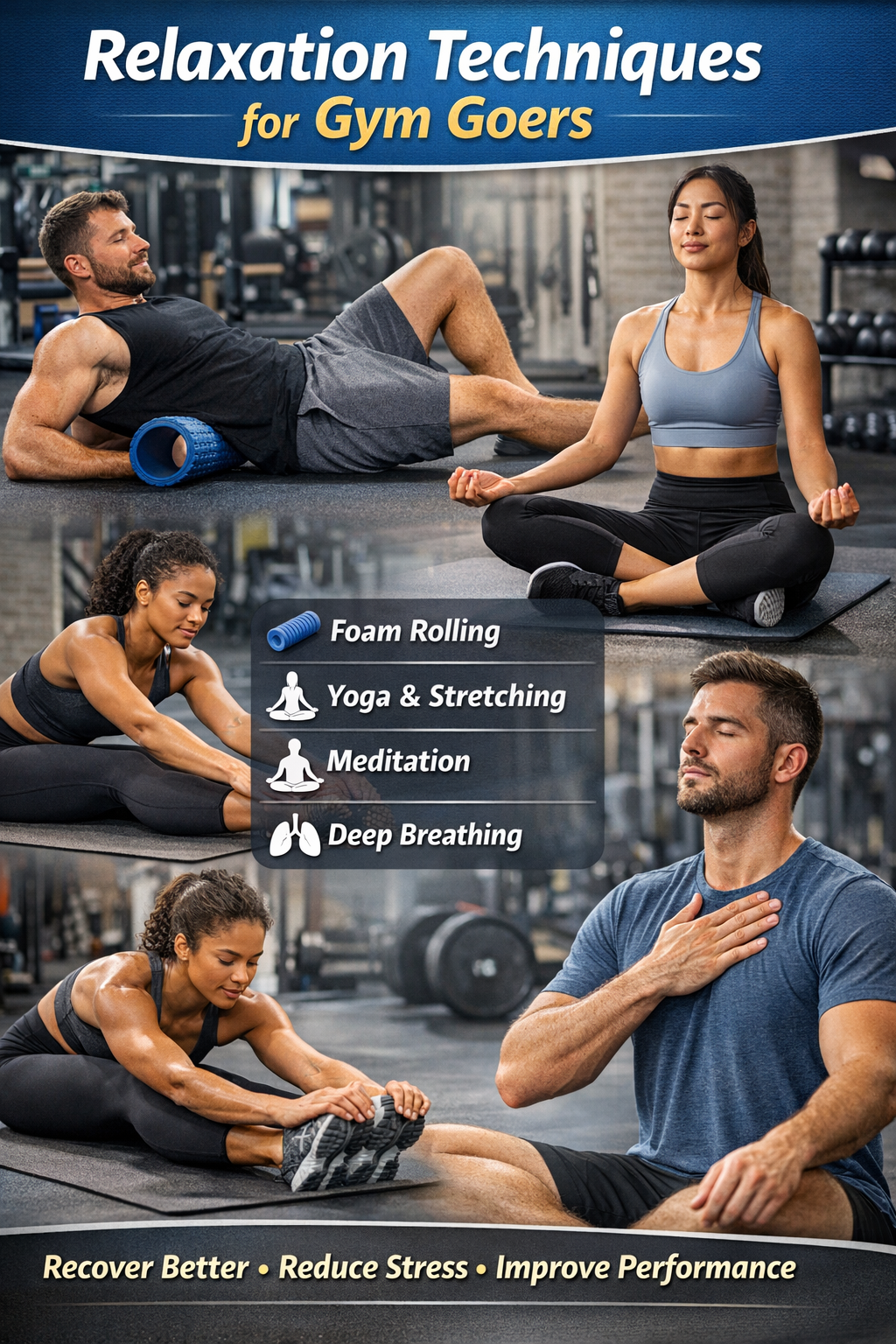
Stretching and yoga improve flexibility, reduce muscle stiffness, and provide mental calm. Gym-goers can benefit from both static stretches and gentle yoga poses post-workout.
Recommended Poses for Gym Recovery:
- Child’s Pose: Relieves lower back tension and calms the mind.
- Pigeon Pose: Opens hips and reduces tightness in the glutes.
- Cat-Cow Stretch: Mobilizes the spine and improves posture.
- Seated Forward Fold: Stretches hamstrings and lower back.
Benefits:
- Enhances blood flow and nutrient delivery to muscles.
- Reduces risk of injury by improving flexibility.
- Supports mental relaxation and focus.
Quick Tip: Even 5–10 minutes of yoga after your workout can improve recovery and reduce post-exercise soreness.
Meditation and Mindfulness Practices
Meditation is not just for stress relief; it is an essential relaxation technique for gym goers that supports mental recovery and performance. Mindfulness practices help reduce stress, improve sleep, and enhance focus, allowing you to perform better in the gym.
Simple Mindfulness Exercise:
- Sit or lie comfortably and close your eyes.
- Focus on your breath, noticing each inhale and exhale.
- If your mind wanders, gently bring it back to your breath.
- Continue for 5–15 minutes.
Benefits:
- Reduces mental fatigue and improves focus.
- Lowers stress hormone levels, aiding physical recovery.
- Enhances consistency by improving motivation and mental resilience.
Case Study: Athletes practicing daily mindfulness showed reduced anxiety and improved endurance performance, according to research in the Journal of Sports Science & Medicine.
Foam Rolling and Self-Myofascial Release
Foam rolling is a form of self-massage that helps release muscle tightness, improve circulation, and accelerate recovery. It is particularly effective for gym-goers who perform heavy resistance training or cardio workouts.
Foam Rolling Guide:
- Focus on major muscle groups: quads, hamstrings, calves, back, and glutes.
- Roll slowly over each muscle for 30–60 seconds.
- Pause on tight or sore areas to allow tissue release.
Benefits:
- Reduces delayed onset muscle soreness (DOMS).
- Increases flexibility and range of motion.
- Promotes faster recovery and reduces injury risk.
Pro Tip: Foam roll before and after workouts to improve mobility and prevent stiffness.
Cold Therapy and Hot Baths
Temperature-based therapies like ice baths, contrast baths, and hot baths are effective for relaxation and recovery.
- Cold Therapy (Ice Baths or Cold Showers): Reduces inflammation, decreases muscle soreness, and accelerates recovery.
- Hot Baths or Saunas: Improve blood circulation, relax tight muscles, and promote mental calm.
Quick Tip: Alternate between cold and hot therapy for maximum recovery benefits, especially after high-intensity training.
Sleep Optimization
No relaxation routine is complete without quality sleep. Gym-goers who fail to prioritize sleep may experience impaired muscle repair, decreased energy, and poor mental focus.
Tips for Better Sleep:
- Maintain a consistent sleep schedule, even on weekends.
- Create a dark, quiet, and cool sleep environment.
- Avoid caffeine and heavy meals close to bedtime.
- Consider short relaxation routines or meditation before bed to improve sleep quality.
Insight: Studies suggest that athletes who consistently get 7–9 hours of sleep experience faster recovery, better endurance, and improved cognitive function
Lifestyle Habits to Support Relaxation for Gym Goers
While techniques like yoga, foam rolling, and meditation are essential, true recovery and relaxation extend beyond the gym. Lifestyle habits play a critical role in enhancing the effects of these techniques, supporting both mental well-being and physical performance. Gym-goers who combine relaxation practices with smart daily habits recover faster, reduce stress, and maximize results.
Nutrition and Hydration for Recovery
Proper nutrition and hydration are cornerstones of effective recovery. The food and fluids you consume after a workout directly impact how quickly your muscles repair and your energy levels rebound.
Key Nutrition Guidelines for Relaxation and Recovery:
- Protein intake: Essential for muscle repair. Aim for 20–40g of protein within 1–2 hours post-workout. Sources include chicken, fish, eggs, Greek yogurt, or plant-based proteins like lentils and tofu.
- Carbohydrates: Replenish glycogen stores in muscles to restore energy. Include complex carbs like oatmeal, brown rice, quinoa, or sweet potatoes.
- Healthy fats: Support hormone balance and reduce inflammation. Include nuts, seeds, avocados, and olive oil.
- Micronutrients: Vitamins and minerals, such as magnesium and potassium, support muscle relaxation and prevent cramps. Foods like bananas, leafy greens, and nuts are ideal.
Hydration Tips:
- Drink water consistently throughout the day. Dehydration slows recovery and can increase muscle fatigue.
- Electrolyte drinks are useful after long or intense sessions to restore sodium, potassium, and magnesium levels.
- Avoid excessive caffeine or alcohol, which can interfere with muscle recovery and sleep quality.
Pro Tip: Preparing a post-workout recovery smoothie with protein, carbs, and electrolytes can save time and ensure your body gets the nutrients it needs to relax and repair efficiently.
Managing Workout Intensity
Even the most dedicated gym-goers can overtrain if workouts are too frequent, intense, or poorly structured. Overtraining disrupts recovery, elevates stress hormones, and increases injury risk.
Guidelines for Balancing Intensity and Relaxation:
- Plan active recovery days: Include light cardio, stretching, or yoga instead of high-intensity workouts.
- Track fatigue and performance: Use a journal or fitness app to monitor soreness, energy, and strength levels.
- Adjust intensity when necessary: If performance declines or fatigue persists, reduce weights, reps, or session length.
Insight: Studies indicate that athletes who incorporate planned rest days and lower-intensity sessions see better long-term performance gains and fewer injuries than those who train at maximum intensity every day.
Mental Health Practices for Gym-Goers
Relaxation isn’t just physical—it’s mental. Stress, anxiety, or a negative mindset can impair workout performance and slow recovery. Incorporating mental wellness practices alongside physical recovery techniques creates a holistic approach to fitness.
Effective Mental Health Practices:
- Journaling: Writing about workouts, stressors, or gratitude helps reduce mental clutter and improve focus.
- Mindfulness exercises: Even 5 minutes of daily meditation or breathwork enhances mental clarity and stress management.
- Positive visualization: Imagining successful workouts or personal fitness goals can increase motivation and resilience.
- Social support: Engaging with workout partners, online communities, or fitness coaches can reduce stress and improve accountability.
Fact: Research shows that mindfulness and stress-reduction practices can lower cortisol by up to 25%, directly supporting physical recovery and mental well-being.
Creating an Environment That Supports Relaxation
Your surroundings matter as much as your habits. Simple adjustments in your home or gym environment can enhance relaxation and recovery:
- Maintain a clean, organized workout space to reduce mental clutter.
- Play calming music or nature sounds during cooldowns or stretching sessions.
- Use aromatherapy like lavender or eucalyptus to promote relaxation post-workout.
- Prioritize a comfortable sleep environment, keeping your bedroom dark, cool, and quiet.
By combining nutrition, hydration, balanced training, mental wellness, and a supportive environment, gym-goers can maximize the benefits of relaxation techniques. When these lifestyle habits are consistent, recovery accelerates, injuries decrease, and both physical and mental performance improve significantly.
Creating a Relaxation Routine for Gym Goers
While knowing individual relaxation techniques is valuable, their real power comes from consistency and integration into a routine. A structured relaxation routine ensures that both your body and mind recover efficiently, allowing you to train harder, reduce injury risk, and enhance overall fitness performance.
Combining Techniques for Maximum Benefit
To get the most out of your post-workout recovery, it’s best to combine multiple relaxation techniques. Here’s an example of a comprehensive 20–30 minute routine:
| Step | Technique | Duration | Purpose |
|---|---|---|---|
| 1 | Foam Rolling | 5–7 mins | Release muscle tension, improve blood flow, reduce soreness |
| 2 | Static Stretching / Yoga Poses | 5–10 mins | Increase flexibility, reduce tightness, calm the nervous system |
| 3 | Deep Breathing / Diaphragmatic Breathing | 3–5 mins | Lower cortisol, improve oxygen delivery, promote relaxation |
| 4 | Progressive Muscle Relaxation (Optional) | 5 mins | Target stubborn muscle tension, enhance body awareness |
| 5 | Meditation or Mindfulness | 5 mins | Mental recovery, focus, stress reduction |
| 6 | Hydration and Nutrition | 5 mins | Replenish energy stores, support muscle repair |
Tips for Success:
- Start small: even 10–15 minutes can be effective for beginners.
- Be consistent: integrate the routine after every workout or at least 4–5 times per week.
- Listen to your body: adjust duration and intensity based on fatigue, soreness, and mental state.
Morning vs. Evening Relaxation Routines
The time of day can influence the type of relaxation technique that works best:
Morning:
- Focus on energizing techniques like light yoga, dynamic stretching, and deep breathing.
- Ideal for those who train in the morning or need mental clarity for the day ahead.
Evening / Post-Workout:
- Focus on recovery-oriented techniques like static stretching, foam rolling, meditation, and progressive muscle relaxation.
- Supports quality sleep and reduces overnight muscle stiffness.
Adapting the Routine to Your Fitness Goals
Your routine can be tailored depending on whether your focus is strength training, endurance, or general fitness:
- Strength Training: Emphasize foam rolling, stretching, and sleep optimization to repair muscle fibers.
- Cardio / Endurance: Focus on deep breathing, meditation, and hydration to restore energy and reduce oxidative stress.
- General Fitness / Weight Loss: Combine all techniques moderately for overall balance and mental calm.
When to Seek Professional Help
Sometimes, relaxation routines may not be enough, especially if symptoms persist. Consider consulting a professional if you experience:
- Chronic fatigue or persistent soreness despite recovery efforts.
- Sleep disturbances lasting more than a few weeks.
- Mental health challenges such as anxiety, depression, or chronic stress.
- Recurrent injuries or muscular imbalances.
Professionals like physiotherapists, sports medicine specialists, or certified fitness coaches can create customized recovery plans, including advanced relaxation techniques, corrective exercises, and lifestyle strategies.
Key Takeaways for a Successful Routine
- Consistency is more important than duration: short daily sessions are more effective than occasional long sessions.
- Mix physical and mental relaxation techniques for holistic recovery.
- Track progress using a fitness or recovery journal to see what techniques work best for you.
- Integrate lifestyle habits like nutrition, hydration, and sleep to enhance relaxation effects.
A well-designed relaxation routine ensures that gym-goers maximize performance, minimize injuries, and enjoy long-term results, making it a non-negotiable part of any fitness plan.
FAQs About Relaxation Techniques for Gym Goers
1. How long should a relaxation session be after the gym?
A typical relaxation session can range from 10 to 30 minutes, depending on the intensity of your workout and available time. Even a 10-minute routine combining stretching and deep breathing can significantly aid muscle recovery and reduce stress. For more intensive sessions, incorporating foam rolling, meditation, and yoga for 20–30 minutes can optimize recovery and enhance performance.
2. Can relaxation improve strength and endurance?
Yes. Relaxation techniques help reduce cortisol levels, improve sleep, and enhance blood flow, all of which are crucial for muscle repair and energy restoration. Studies show that athletes who integrate mindfulness, stretching, and controlled breathing recover faster, which allows them to train harder and improve both strength and endurance over time.
3. Is meditation more effective than stretching for recovery?
Both serve different purposes:
- Stretching targets physical recovery, improving flexibility and reducing muscle stiffness.
- Meditation focuses on mental recovery, reducing stress and improving focus.
Combining both techniques provides holistic benefits, addressing both the body and mind, which is why many gym-goers include meditation after stretching or yoga sessions.
4. How often should gym-goers use foam rollers or take ice baths?
- Foam rolling: Ideally after every workout, especially targeting sore or tight muscles. Spending 5–10 minutes on major muscle groups is sufficient.
- Ice baths / cold therapy: Best used 1–3 times per week, particularly after high-intensity or long-duration workouts, to reduce inflammation and soreness. Overuse may hinder some adaptive muscle growth, so moderation is key.
5. Can relaxation techniques prevent injuries?
Absolutely. Relaxation techniques like foam rolling, yoga, stretching, and proper hydration improve flexibility, mobility, and circulation, which reduce the risk of strains and overuse injuries. Additionally, managing mental stress through meditation and mindfulness can prevent fatigue-related mistakes that often lead to injury.
6. What’s the easiest relaxation technique for beginners?
For beginners, deep breathing exercises are the most accessible and effective starting point. They require no equipment, can be done anywhere, and immediately activate the body’s parasympathetic nervous system, promoting calmness and recovery. Once comfortable, beginners can gradually incorporate stretching, foam rolling, and meditation into their routine.
7. How soon after a workout should I start relaxation techniques?
- Immediately post-workout: Begin with cool-down stretching and foam rolling to prevent stiffness.
- Within 30–60 minutes: Perform deep breathing, progressive muscle relaxation, or meditation to optimize mental and physical recovery.
- Before bedtime: Light yoga, meditation, or breathing exercises help enhance sleep quality, which is crucial for overall recovery.
Conclusion
Incorporating relaxation techniques for gym goers is not just a “nice-to-have”—it’s a critical component of any successful fitness routine. While intense workouts build strength, endurance, and muscle mass, true progress happens during recovery, when your body repairs tissues, replenishes energy, and restores mental balance. By practicing a combination of deep breathing, progressive muscle relaxation, stretching, yoga, meditation, and foam rolling, gym-goers can significantly enhance both physical recovery and mental well-being.
Lifestyle habits like proper nutrition, hydration, sleep optimization, and stress management further amplify these benefits, ensuring that your body is fully prepared for your next workout. Consistency is key: even 10–30 minutes of daily relaxation practices can yield long-term improvements in performance, focus, and overall health.
Key Takeaways:
- Relaxation techniques accelerate recovery, reduce muscle soreness, and enhance mental clarity.
- Combining physical and mental relaxation methods creates a holistic approach to fitness.
- Lifestyle habits—nutrition, hydration, sleep, and stress management—support and enhance the effects of relaxation techniques.
- Tracking progress and adjusting your routine based on your body’s signals ensures optimal results.
Final Thought: The gym is not just a place to push your limits—it’s also a space to respect your body’s need for rest and recovery. Integrating these relaxation techniques into your routine will help you train smarter, prevent injuries, and achieve your fitness goals faster.
Start small, stay consistent, and make relaxation an essential part of your fitness journey. Over time, these practices will transform not only your recovery and performance but also your overall physical and mental health.